


Emily Whitehead Interview
It’s time to bring you your first taste of Artistic Gymnastics today as we chat with Tokyo Olympian Emily Whitehead about her amazing career and Olympic experiences! We find out from Emily how she got involved in the sport and what it is like competing at major competitions at such a young age. We also learn about the importance of being an all-around athlete in gymnastics and just how damn tricky that pesky beam can be. Added to this we learn about how an injury that prevented her selection for the Rio Olympics went on to help her achieve further success, and just why she was so close to pulling the pin on the sport once COVID hit last year. It’s a fun and great chat that will have you flipping all over your house, so get to listening!
EPISODE TRANSCRIPT
Please note this is an automated transcript that may contain errors.
BEN WATERWORTH: It is Off The Podium, An Olympics Podcast, coming to you today for another interview episode. Now, first ever taste of artistic gymnastics. We've done trampolining, we've done rhythmic gymnastics. Now it's time to get into artistic gymnastics as we speak with Tokyo Olympian Emily Whitehead from Australia. Great chat here with Emily, learning a little bit more about the sport, getting into it. What's it like being in a sport at such a young age and then going to big competitions around Australia and around the world? We find out how close she was to actually competing in Rio and how the injury that prevented her from going to Rio actually helped her to further success moving forward. There's some great chat here about her time at the Comm Games in 2018 and just how close she actually was to giving up the sport after the whole COVID situation hit the athletes last year. It's a fascinating insight into the mind of an athlete and how that really nearly stopped her from being a Tokyo Olympian. Without further ado, here is our chat with Tokyo 2020 Olympian in the sport of Artistic Gymnastics, Emily Whitehead.
BEN WATERWORTH: So excited for our next guest here on Off The Podium, our first athlete from the sport of artistic gymnastics. We've covered trampoline, we've covered rhythmic, now it's on to artistic. And this is the one that I'm very much excited for because it's a sport which, if I was to try anything at the Olympics, this would probably be very much near the bottom. Just for the pure fact is that I can barely even take a step, let alone do any form of flips or rolls or anything along those lines. She is a two-time Commonwealth Games bronze medallist and has just recently returned from Tokyo for her first ever Olympic Games. And I'm so excited to learn about her experiences and her career in the sport. Please welcome to the show, Emily Whitehead. Emily, first of all, welcome to Off The Podium. It's a pleasure to have you on the show today.
EMILY WHITEHEAD: Thanks for having me.
BEN WATERWORTH: It's so exciting to talk about gymnastics. As I said, we've covered rhythmic, we've covered trampoline. We're into the real gymnastics now, aren't we, Emily? Artistic, that's where it's at, right?
EMILY WHITEHEAD: Definitely.
BEN WATERWORTH: Which I'm fascinated to think it's taken us this long to get someone on from Artistic Gymnastics because it's obviously one of the key events at the Olympic Games. Everybody loves watching gymnastics, sort of the skills and the talent involved. Was this always a dream as soon as you started gymnastics that this was what you wanted to do, go to an Olympic Games?
EMILY WHITEHEAD: When I very first started, it was just a lot of fun, and I loved being able to flip around. It wasn't until I was a little bit older, but not like I was eight when I started to really form that dream of going to the Olympics. And yeah.
BEN WATERWORTH: Kind of go along those roads. And I believe your family was heavily involved in gymnastics sort of when you initially started going to gymnastics. Was that kind of a lot of doing that because of the family or was it sort of a key moment you remember when you were younger going, hey, gymnastics, let's give this a try.
EMILY WHITEHEAD: Yeah, my oldest sister actually did gymnastics when I was younger, and so I wanted to follow in her footsteps. And then I guess my brother and I just joined together and it just took off from me.
BEN WATERWORTH: And how did your brother go? Did your brother stick with it as well or did he kind of after a while go, okay, no, this isn't for me, I'm gonna try something else?
EMILY WHITEHEAD: Yeah, at his first competition, he had to wear a leotard and that was it. After that, he's like, no, I'm done.
BEN WATERWORTH: The leotard's a deal breaker.
EMILY WHITEHEAD: Yeah.
BEN WATERWORTH: Did he go on to play other sports though? Like maybe wearing something a bit looser, more fitting? Is that kind of it?
EMILY WHITEHEAD: Yeah, he did like footy, cricket, just like all the local type sports.
BEN WATERWORTH: Okay then, yeah, I don't see them wearing leotards in cricket or maybe one day, but not quite yet. So was there a particular sort of thing about gymnastics when you started, when you were younger, that you enjoyed kind of, was there an aspect about it that maybe if you were playing other sports as well, that this was the one that made you sort of stick to gymnastics over any other sports you may have been playing?
EMILY WHITEHEAD: Yeah, look, I just loved the ability to like flip around. I loved the freedom. I feel like in gymnastics, especially at the start, like you do lots of like circuits. So you have different stations and you just go around. So you got to keep moving where like in swimming, you did like one lap and then you had to wait down the end. So to me, I just loved being able to continue moving and you know, keep learning.
BEN WATERWORTH: The thing that is so fascinating about gymnastics is just the variety of the different apparatus and kind of everything that you can do it. And just the things that you're able to achieve in it. I mean, did you at a young age start favoring any particular apparatus that obviously led you on to kind of choosing these more in your senior career or is there a decision that sort of gets made by coaches going, okay, you're particularly good at beam at this age. So focus on that floor, you know, things like that. So how does that work when you first start in the sport?
EMILY WHITEHEAD: When you first start, it's like you're an all rounder. So you have to train each apparatus. You're always going to be better at one or two apparatus. So I was, when I was younger, better at floor and vault. Bars, I was just so weak that I wasn't the greatest at it and I struggled to learn new skills. And then beam for me, when I was younger, I was okay at it. And then the older I got, the more like, I feel like each level you change what you're best at. So then it kind of went to a phase where I was really good at beam and vault, and I struggled a little bit on floor just with like the leaps and stuff. And then bars, I just, I struggled with for a long time and it wasn't until I think junior where my bars started to really pick off. And now I believe my bars and vault, probably my two stronger ones and beam is a bit, and floor is a little bit weaker.
BEN WATERWORTH: I'm always intrigued by beam because that looks terrifying, Emily. I mean, how wide is that beam?
EMILY WHITEHEAD: 10 centimetres.
BEN WATERWORTH: 10 centimetres. That is ridiculous. And the amount of skills and everything. I mean, I'm guessing this is a dumb question, but you wouldn't know how many times you would have fallen off that thing over the years. I can't imagine it's something that you keep track of.
EMILY WHITEHEAD: No, you definitely don't keep track of, but there is one skill in my beam routine. It's my acro series. And for as long as I did it, I just stacked on it every day. So I definitely have a bit of a fear with that one. And it's something that we've worked really hard to eliminate, I guess, but it just takes a lot of numbers and hard work to get over that fear.
BEN WATERWORTH: Which I can imagine too, you're saying focusing on the all-around aspect. And obviously when you're very young, you're not hitting the gym five times a week and kind of doing what you're doing today. But the training and the physical aspect when you do hit the gym must be very unique when you're trying to, I guess, keep that all-around aspect, but obviously focus. And imagine you're working more on, say, the upper body for the bars, and then for a beam, you're sort of working more on that balance aspect. So I can imagine your gym workouts have incredibly varied depending on, I guess, what you're performing on best at, at that part in your career.
EMILY WHITEHEAD: Well, basically, it's pretty even all over. Bars and beam are two that we do twice a day, and then we alternate vault and floor between the training sessions just because they're such high impact on your legs, and they're not, they're still difficult, but not as complex as bars and beam are.
BEN WATERWORTH: Which it's, I mean, the thing is with everything with the all around aspect of it too, it's just that mentality that you kind of, I can imagine have to really focus on when you're coming into those events too. I mean, working with sports psychologists, kind of keeping the brain clear and everything along those lines too is equally important, no doubt. As a physical trainer, do you have any sort of aspects to the mental side of the training that you do that maybe it kind of helps you a little bit closer to competitions? Anything along those lines that you can share with us today?
EMILY WHITEHEAD: Yeah, so I guess it depends. Like in, out of season, I try to really draw a line between the gym and my outside life, just because I don't want to be constantly thinking about it. But in comp season, I'll often reflect on that training session. And getting really close to comps, I'll start to watch some routines that I've performed well in the last few weeks, because we often will video stuff. And so for me, watching things back really helps me mentally just be more confident and remember that I have done all that hard work.
BEN WATERWORTH: How many hours, Emily, are we talking training each week? Give us a ballpark figure when you're sort of in peak training mode, maybe right close to an Olympic Games. How many hours are you focused on all that training?
EMILY WHITEHEAD: We'll do between 28 and 32 hours a week. Wow.
BEN WATERWORTH: That's crazy. I can imagine then rest day must be your favourite day of the week at that point.
EMILY WHITEHEAD: Yeah, definitely. So Sundays we have off like every week, which is fantastic. I love my Sundays. It's a good day to like just hit reset. But then we coming closer to comps, I also train Wednesdays, but when we get closer to comps, sometimes that's also a rest day.
BEN WATERWORTH: What is a rest day then for Emily? What are you doing? Are you just sleeping in, watching Netflix, catching up with friends, just doing whatever the hell you want, basically, I can imagine at that point.
EMILY WHITEHEAD: Yeah, look, for me, Sundays I'll have like a slow morning. I'll enjoy a coffee. I'll just spend a bit of time with the family. And then before lunch, we'll go do the standard food shop and kind of do all the washing, get ready for the next week. And then the afternoon, we'll just chill out. That's like a typical Sunday. Obviously it changes if I decide I want to go out or spend time with friends or whatever. But I try to keep the Sundays like just as stress free and just slow.
BEN WATERWORTH: I was going to say it's a perfect day to have off then if all of a sudden on a Saturday, you knock off the training, you want to catch up some friends, go out, maybe, you know, kind of do that sort of stuff. Because at least you can recover on the Sunday, or I'd have a big Saturday night, sleep in, you know. So it's a perfect day to have off during the week.
EMILY WHITEHEAD: Yeah.
BEN WATERWORTH: Works out that way. Now you sort of, as you mentioned, get into it at eight and then start competing a little bit more further at the age of 11. The thing that always is fascinating to me about gymnastics as well is that you're obviously starting at a very young age and kind of hitting these big, big competitions, you know, extremely young, you know, 10, 11 years old. What is that like as sort of someone that age to be able to have to face competitions like this? Does it build you up better so that when you are 21 and you get to an Olympics, this is kind of just down pat. You're a veteran, you've been doing it for 10 years, or is it kind of a lot of pressure on somebody at that age to really hit your straps at a level when, you know, a lot of people are just out there not competing at a major level like that sort of stuff. They're just worrying about school and friends and watching cartoons and things like that.
EMILY WHITEHEAD: Yeah, look, I think it can be both ways. I do think that if you have the right support network, competing at such a young age is just fun. And I think for me, that's what I had. I had fun the whole way through. It wasn't really until like the higher levels where it started to become more stressful because I put the pressure on myself. I wanted to do well. I've been doing this for so long and stuff. But I guess the higher you get, the more nervous you get because you have bigger skills. But you've also mature enough to understand that you have done all the hard work. So you're gonna balance it out a bit. But definitely having the right support at such a young age has helped me not have any issues competing as such.
BEN WATERWORTH: And I can imagine your sister, obviously having done it as well, she could be someone good to look to and help out. I mean, how much of a help and an influence was your sister through those early days that led you into further competition?
EMILY WHITEHEAD: Look, I think we both started competitions around the same time. So we actually, from what I understand or could say, is we went through it better together. She would come and watch my comps and support me and then tell me what a good job I did. And then I would watch her comps, tell her what a great job she did. We'd always try and find something that we really enjoyed from each other. I often really loved watching her floor just because she was so expressive. And so that's something like I've strived towards.
BEN WATERWORTH: And I can imagine, though, that sibling rivalry is quite strong. So it's kind of like all of a sudden at a competition, it's like, hey, you know, I won, you got second or vice versa. So kind of bit of, you know, the sibling rivalry still existing along the way.
EMILY WHITEHEAD: Well, she's no longer, like she finished gymnastics quite a while ago, but I think for a long time it was, we were in different streams. So it was like she, even though she was older, she was in the national program, I was the international program. So I think for her mentally, that was hard. For me, I never really took a step back and looked at it until like the last couple of years. And it is a hard one, but I mean, I'm so proud of what she achieved in gymnastics and she's taught me like so much throughout my career and supported me the whole way.
BEN WATERWORTH: Was there a point, Emily, those days when you are sort of, you know, put on the international program, started working at the rank set, you really thought this Olympic dream was possible? Can you remember sort of at what stage? And then did you set yourself a goal for, hey, I want to be in Rio, I want to be in Tokyo, sort of was there a moment, OK, this is real and I'm going to go to these games?
EMILY WHITEHEAD: Yeah, definitely. For me, it was when I made my first junior national team. I think that's a big step in the right direction. And making even my first overseas trip was just the best feeling, and so I kind of realised how good that feels. Imagine how good it will feel making a world's team, Kong Games, Olympics. And so then I started to set those goals, but I think in 2016, I was a first year senior. So realistically, it's quite hard to be put on that team just because the experience isn't quite there. So realistically, I was like, it'd be great if I could, but I also know that this isn't the end goal. I wanna, I want 2020. But I think the important thing is not to overthink it. So I try to take it year by year and set smaller goals, but in the back of my mind, I still have that big goal.
BEN WATERWORTH: You were very close though to Rio. You mentioned making sort of that team in 2016. You were meant to go to the Pacific Rim Championships and even the Olympic Test event, but a torn calf muscle kind of pulled you out of that. I mean, besides the injury, I mean, just making those events being selected for an Olympic Test event, I mean, I can imagine that that's massive boost for your confidence that you are sort of one step closer to an Olympic Games. I mean, do you remember sort of those feelings before the injury when you were selected for those events?
EMILY WHITEHEAD: Yeah, look, I think because I was so young, I didn't really acknowledge the achievement that I had done. For me, it was like, right, you've made this team. Okay, what's next? Like how, it was such like a fly stress trip. So for me, I was just learning so much. I had never been on a senior trip. I had never been in such a serious situation in my gymnastics career. So to me, my head was just a bit all over the place trying to like soak in everything that I never fully realised like what an achievement I like achieved until I think a year later when we were sitting down talking about like experiences and stuff, and I was like, oh yeah, like I made the test event team, which is huge. So that was like quite an interesting trip, but even though it didn't work out the way it should have, I'm beyond grateful for it because I've really grown as a gymnast.
BEN WATERWORTH: Is there a peak age for a gymnast? Because obviously you're starting off very young. You're 21 now, which you look at who you're competing against. I mean, there are people there who would have been 15, 16, what you would have been in Rio. But is there kind of an age that gymnasts work towards that is sort of like, this is where I'm at in terms of body, mentality, everything. This is my peak performance age right now in the sport.
EMILY WHITEHEAD: For a long time, it was like 16, 17, 18, but now it's getting older. I think that it's like between your early to mid 20s is like when people are starting to really peak. I think if you have the right support system, you're able to go longer and enjoy it more. Like I feel like now I'm just getting started.
BEN WATERWORTH: Which is good to hear because was it Beijing, I think it was when it was all the controversy around the Chinese team and they were allegedly putting like 12 and 13 year olds in there and it's kind of, it's crazy to kind of watch a sport where you've got somebody so there. And it's also crazy to think that when you do, you watch the Olympics and they'll be like, oh, there's a 20 year old, she's a veteran of the sport. And you're thinking, wow, like this is such a crazy sport to think that at 20, you're basically like almost, I hear the words, a veteran of the sport. That's just a subtle way of a commentator going, yeah, you should be retiring soon. Probably time, hang on. And then you look at someone like Oxana, who was what, like 43, wasn't she in Tokyo? So I'm glad to hear that, you know, we're kind of getting past that point, whereas you're perceived as over the hill when you're like 19 or 20.
EMILY WHITEHEAD: Yeah, I'm very glad. It's such a good sport. And I think the older you get, the more you appreciate it and the more mature your training is. So it's just better.
BEN WATERWORTH: We just want to talk about the fact that there are 12 and 13 year olds skateboarders winning gold medals at the Olympics. That's a whole other kettle of fish. Tearing a calf muscle doesn't sound fun. Obviously it's a sport with lots of, you know, unique and painful injuries. How did you tear the calf muscle and sort of how was the recovery from that?
EMILY WHITEHEAD: I tore it like the day before competition on my beam dismount, which was devastating. I think no one really expected it. And so I just, I don't know, it was a rough one, but I think my body was just exhausted. It was my first senior trip. There was so much pressure. I think, like I said before, my head was a bit like over the place. So I feel like the recovery side of things I didn't focus on as much. So I think it was just like a mixture of things, but you know, recovery wise, it took, I basically arrived back in Australia on the Wednesday, and I was back in the gym Thursday, just doing as much upper body, middle strength as I could. So that once it had healed, I was ready to go for like back to training, and I was fit and ready to go.
BEN WATERWORTH: So that drive was still there then, that you obviously go through such a painful injury. You got disappointment of day before competition, as you were saying, but it's like, right, okay, put it to the back of the mind. Let's do what I can in my recovery process here, because my journey's not over right now.
EMILY WHITEHEAD: Yeah, I remember when I first found out about it, I had like a cry and I spoke to my coach and I was speaking to my coach after that. I realised this is just the beginning for me. So yes, there's some injuries, unfortunate, but I still have like a whole career ahead. And so I wanted to like make the most of this situation.
BEN WATERWORTH: Which from that point on though, the recovery, I mean, you went onto the best results of your career, basically, Emily competing more overseas, 10th overall in Canada at the La International Gymnastics. Am I saying that correctly? Good, all right. I'm terrible at pronouncing it, so I have to clarify that. Silver at the World Cup in Melbourne, and of course a couple of bronzes at the Commonwealth Games on the Gold Coast. I mean, how is that period then to recover from a pretty significant injury to all of a sudden go, okay, did it take injuring myself maybe to make myself better? And here I am right now kind of meddling on the world stage.
EMILY WHITEHEAD: Yeah, I mean, that injury like between those comps feels like so long ago that like you kind of forget about it. It took me a while to build up the confidence and trust my calf before I started back. But basically once I had that trust, I was like full steam ahead, ready to go.
BEN WATERWORTH: I can imagine too. I mean, bronze medals at the Commonwealth Games in a home Commonwealth Games, amazing. But silver in a World Cup in your home state in Melbourne. I mean, I don't know if you want to rank the two achievements there, Emily. I can imagine they both hold very big significance for you. But I mean, does one hold weight a little bit more than the other, because maybe more family and friends were able to attend the World Cup, given that it was sort of in Victoria.
EMILY WHITEHEAD: Yeah, look to me, I think I went into that World Cup. It was my first World Cup. I didn't really know what to expect. I had just started playing around with two vaults. So for me, it was just, I wanted to hit two of my new vaults. And I did that. And I remember we went to the back and I was like putting my clothes on and my coach was like saying, you know, your first vault, like it wasn't your best, but like, you know, so we're kind of like talking about the technical side of things. And then I think we kind of just figured like, you know, com's done, let's go. And then they pulled me aside. And we're like, no, like, you need to get your uniform off. You got second. And so like, that's a pretty special moment to me, because it just goes to show, like, no matter what you achieve, like if you get a medal or not, it's your performance on that day. And so to me, that performance, it was a big step in my career is like performing two big vaults, but it was also like my first vault I wasn't happy with. So it kind of gave me that extra like drive to then spend the next few weeks before Kong Games, really focusing on those two vaults and making sure that I didn't make the same mistake. So I think they're like equal, but I'd have to say my Commonwealth Games medals are definitely more special to me.
BEN WATERWORTH: It was such a unique, fun games. I was at those games too working, and it was just the atmosphere and everything around the Gold Coast, because Gold Coast is a fun place to be at the best of times, but add 80-odd nations of the world coming there to compete and all the different sports and everything like that. I mean, was that almost like a dress rehearsal to what you would then experience at the Olympics? Obviously, the comm games are a little bit smaller than the Olympics, but you get a taste of a multi-sport event where you're not going to an event purely for gymnastics. You can mingle with athletes from other sports. You can be in a village where you can meet Kate Campbell and kind of see people like that, that kind of you never would associate at other competitions. I mean, kind of, what was that whole experience like for you at the comm games in 2018?
EMILY WHITEHEAD: I went into comm mouth games, not, I had no idea what to expect. I didn't realise that there was a comm mouth village. I didn't realise that all sports stayed together. I didn't understand how much uniform we get. So it was such like a special moment, but I just remember four of five team members were all new to this comm mouth games experience. So we all got to experience it together, which was just insanely amazing. And then I feel like it was like the perfect step to an Olympic games. Cause I went into the Olympics knowing, okay, there's going to be a village where there's a dining hall. We're all in the same place. Like you get all this uniform. So mentally, I think Commonwealth Games is like the best thing you can do before an Olympics. Cause it's a little bit smaller. So it's a little bit calmer, and you can kind of soak it in a bit more, and then you're ready for what's next.
BEN WATERWORTH: And I can even imagine things like, say the media retention that you're getting, because as big of a sport gymnastics is globally, it obviously doesn't quite hold the stature in Australia as it does in some other countries. So I can imagine then that you're not probably used to that added pressure that say a media interview after an event will bring by local journalists. I mean, kind of was that a good training aspect to it too, that you're going through the mixed zone after an event with a medal and kind of having to deal with interview requests and, hey, people wanna talk to me about this. This is kind of interesting.
EMILY WHITEHEAD: Yeah, so we won our team medal first. And I remember we went to get interviewed and I was like, they put me on first. And I was like, oh, and they were like, how was your competition? How do you feel after? And I just remember, I was like, great. So for me, even the lady that interviewed us said, that next medal I won and the interview I did after that was just a thousand times better than the first one. And so I definitely learned heaps how to speak in an interview and stuff, which was also really great because it's something that we haven't really been taught yet.
BEN WATERWORTH: Which I think to, it's that exposure, isn't it, as well? Because going back to the point about the sport, not the biggest in Australia outside of maybe an Olympics or a Commonwealth Games, because it's great to be able to, I can imagine, not only showcase your abilities on the world stage, but just pay attention to the sport, because I mean, fast forwarding a little bit to your Tokyo experiences, that obviously is gonna lead to more attention. And then that can lead to, say, a young girl watching you on TV, or maybe she's in the crowd there on the Gold Coast, and she's inspired by yourself or your teammates to kind of continue that next generation. And particularly at the moment, when we're 11 years away from a home Olympics, I mean, that's kind of something for you that I can imagine feels special when you've got somebody who maybe says to you, like, hey, Emily, I was inspired by your bronze medal win at the Commonwealth Games, and now I wanna be a gymnast.
EMILY WHITEHEAD: Yeah, look, the support at KOM Games was insane, but the Olympics support was just a whole nother level. I did not realise how much people follow my journey and really care for me. It was just out of this world. The amount of messages and posters and everything I received, I really felt the love.
BEN WATERWORTH: I love asking all our guests on this show who have won medals, I mean, in any competition, what they do with them. I mean, do you have a display for sort of your gymnastics medals? Is there like sort of the tiers where you've got like the KOM Games and the World Cup ones sort of a little bit higher than the national ones, or are they just in the sock drawer that inspires you every time you get a pair of socks out? You're like, cool, Commonwealth Games medal. Yep, that's my start to the day.
EMILY WHITEHEAD: They're just in my cupboard, like in a box.
BEN WATERWORTH: In a box. Yeah. Does the box get bigger though? Like the more you win, like, oh, gotta go down to the reject shop, buy a bigger box now, more medals.
EMILY WHITEHEAD: No, it's like, it's a decent size, I guess.
BEN WATERWORTH: You'll have to, when those Olympic medals come, that's all of a sudden when it sort of goes bigger. So after Com Games, after 2018, sort of in the lead up to Tokyo, was there anything that your coach or yourself was like, okay, we're hitting our stride, we're doing well here, this is what we need to focus on. Was there kind of something that changed in the lead up to kind of turn up the week a little bit more for the Olympics?
EMILY WHITEHEAD: Yeah, definitely. So I actually had a back injury in 2019. So it was a pretty rough period because it was near the end of 2019. It was around August to mid December, and our trials were in March. And so I've never actually spent over three months out of the gym completely, and that was exactly what I did. So mentally, I was like, realistically, I don't know if this is achievable and stuff. So it was a pretty down time. And then I came back and I spent three months working the hardest I could, and I actually got all my skills back. I wasn't quite the quality I wanted, but I made like huge progress. And then a week later, we got shut down with COVID. And I knew that it was gonna be a long time out of the gym. I didn't realise how long, but I knew that I was gonna have to do all this over again. And so mentally, I was just exhausted. I didn't want to have to do it again. So during COVID, I kind of lost that drive or that dream for the Olympic Games. And it took like almost a whole year to get that back. So we started back training in like July, I think, where like Melbourne opened up a bit. And so I was ready to finish gymnastics, but I just remember, I think it was my mum saying like, you can't finish on a low. You can't finish when you're not in love with this sport. And so I was like, okay, that's true. Like I was like, I'll give it three months. I'll get back into the gym. I'll move my body. Maybe it's just because I've been out for so long. And that's exactly what it was. I remember the first session I came home and I was like, oh my God, that was so fun. Like we got to swing on the bars and like jump on the tramp. And so that next three or four months, I just had fun in the gym. There was no focus on what was to come and stuff. So I think that for me was the best thing because I was able to find that love for the sport again. And I feel like it wasn't until February, like I was still trying my hardest in the gym, but February, it wasn't until that February camp where I was like, no, this is what I want. And so it was like a switch just flipped and then it was 100% focused and giving it my absolute everything in that lead up. I wanted to leave no regrets. And that's exactly what I did. And I remember going to nationals in May, which was the continental trial. So how I qualified for the Olympics. And I remember my mum was like, you know, how are you feeling and stuff? And I was like, good. And my mum was like, what? Like, you know, this isn't Emily. And I was like, no. If I think about it, like I've reflected on like the last few months and I have given everything I could have. And we were so particular on the finer detail. If I didn't make it, it wasn't because I didn't try my hardest. It was just, I wasn't the best on the day. And that's probably the first competition I've gone into with that mindset. And it is the best feeling to go in before you compete, knowing you've done absolutely everything you can. And so it was a pretty special moment.
BEN WATERWORTH: Which is kind of almost like a double edged sword, that journey, because I was about to say, getting injured that close, and then the postponement was almost like a blessing, but then you sort of go through those mental aspects. So I mean, that's a very unique sort of journey to get from that injury in 2019 to ultimately that qualification in 2021.
EMILY WHITEHEAD: Yeah, I've learned a lot along the way, that's for sure.
BEN WATERWORTH: Which one thing I love though, is going through your Instagram, the video that you and Georgia posted, the qualifying to Home Among the Gum Trees, little bit of fun there. The moment though that when you are 100%, you know you're going to the Olympics. You're an Olympian at that point. I mean, what's that feeling like? And does it sort of take you back to when you were younger, when you first maybe thought that the Olympics one day could be a possibility and to realise that you've realised that dream now?
EMILY WHITEHEAD: For me, that dream, realising that dream had been achieved was definitely at the Continental Championships, when I saw that my name was the number one. So that meant I secured that spot. So that was like such an emotional time. And then I guess, so it was like all that Friday night, I went to bed at 3 a.m. and I woke up at six and I was like, yep, ready to start the next day. Like, it was just crazy, the emotions that come from achieving such like a lifelong dream. And then I guess it kind of got pushed to the side and I was like, all right, now the work's beginning for this Olympic journey. And so you kind of forget that you made it, I guess, like it's pushed to the side. Then when we got the ticket and made that video, it was like, okay, this is real. Like no one can take this away from us now, but it wasn't until we actually competed, I think straight after my beam routine, Georgia was like to me, we're officially Olympians. And in that moment, that was the moment where like, you're like, okay, no, I have achieved this. And it's insane to look back on and realise like, what we've achieved.
BEN WATERWORTH: Yeah, which, I mean, you talked before about Comm Games, when you get the uniforms and things like that. I mean, I always love hearing from our guests, kind of just that experiences of the lead up and getting to Tokyo and all that kind of stuff. I mean, getting your kit, I can imagine is pretty exciting. Getting that Qantas ticket, you're on the flight, just being surrounded by so many other athletes, seeing the rings everywhere you go. I mean, is it something that you can soak up? Or are you just such in game mode that you just kind of take it in when you can, and then maybe it's after competition when you realise, okay, I can maybe soak this up a little bit more.
EMILY WHITEHEAD: So we arrived on the Saturday night in Tokyo and got all day Sunday to really soak in that village wine, which was the best thing because there's so much happening, there's so much excitement in the village that giving us that whole day to really soak it in allowed us to then focus as much as we could for the training side of things.
BEN WATERWORTH: Which, I mean, you want to have that at least moment, don't you? You kind of want to be able to have a moment, given it was such a unique games where things weren't quite how they were, obviously that means you can't do things like the opening ceremony and probably mingle around like you generally could in an Olympics. But I can imagine, was that an important part for you though to have at least that experience where you can do that so that you can leave an Olympics going, okay, well, I competed in Olympics, fantastic. But I also was able to experience all the kind of journey aspects around an Olympic Games when you are actually there.
EMILY WHITEHEAD: Yeah, no, we definitely made the most of that Olympic village and enjoying that experience. We were lucky enough to have like a few half days and even full days just in the village. And it just made the whole trip that much better. Like I couldn't imagine going to the Olympics and not being able to really enjoy every moment. Like we, in the afternoons, we would find bikes and ride around the village. The amount of photos we took and stuff, it was just an insane experience. And I'm so blessed and glad that we were able to enjoy that village life.
BEN WATERWORTH: One aspect, I actually haven't asked this to any of our guests yet, but obviously the Olympic rings, the photo on the gram, all that kind of stuff, it's a great shot. But is it just like a daily queue for everybody to line up to get there? And you've just got to wait for that perfect moment where you don't have 50 other people in the background, because I mean, they're great photos, but I'm always looking at them going, there's no people around, there must be a line there waiting for people to just get that perfect photo.
EMILY WHITEHEAD: Yeah, no, there is a line. I remember opening ceremony night, like we were like, let's go get some photos as a team around the rings in our uniform and stuff. And it took forever. And people just, we ended up doing double sides. So one would stand one side, and then there's the rings, and then another group would stand the other side, just because there was so many people there. So yes, you just have to pick the right time. There were a few times we went and the line was too long that we were like, we'll come back later. We were lucky in the Oz Hub, it was kind of near the ring. So if we stepped out onto our balcony, we could see if the line was big or not. If it was small, we were like, quick, let's go down.
BEN WATERWORTH: Run on, run on down there as well. What other nations was the Australian Hub near? Kind of like what sort of was the other athletes that you could sort of nearly associate with?
EMILY WHITEHEAD: I think that was like India, USA, Great Britain, Russia. Like we were in a pretty good section, I feel.
BEN WATERWORTH: Yeah, and it's also good for your competitors. I mean, you could be, I don't know, up at three in the morning, blaring some music and be like, hey, USA, I know you guys are good, but hey, you're not sleeping tonight. We're going to beat you tomorrow. You need sleep, yeah, okay, well, I mean, that might be a little dent in that plan, potentially, when it comes to that. Did you set yourself a goal going into competition? Was there a particular position? Was it to make the all-around finals? Was it to make an apparatus final? And kind of like, what were your hopes going into the competition?
EMILY WHITEHEAD: Yeah, for me, it was just amazing being there, like, actually achieving that position I achieved was huge. So I tried not to set too much pressure on myself. I think I just really wanted to go out there and enjoy that competition. And that's exactly what I did. I would have loved to have made an all-around finals, but I did hit a PB, so I can't be too disappointed that I didn't quite achieve that.
BEN WATERWORTH: Which at the end of the day, if you're going to hit a PB, hit the PB at the Olympic Games, right? I mean, there's no better way to do it, is there?
EMILY WHITEHEAD: Yeah, definitely.
BEN WATERWORTH: With such a, what seemingly is an individual sport, obviously there is the team aspect to gymnastics. How can you and Georgia kind of work off each other? And also Tyson to an extent too. I mean, is there sort of a comradery? You're spurring each other on, like you're giving each other advice. I mean, how does the team aspects of gymnastics works when maybe there's obviously only three of you there for Australia, whereas other teams have obviously got more. But I mean, how does that help your performance?
EMILY WHITEHEAD: Honestly, I think this was the first trip where we've all been able to support each other so much. We were all new to this experience, especially Georgia and myself. We were together 24 seven. So we just bounced off each other. If she had an issue, I helped her. If I had an issue, she was helping me. The support and the connection between us is just insane. Our friendship has just really stepped up a whole nother level. So I guess we were both just so thankful and glad that the Olympic Games went ahead and that we were actually competing in it, that the rest almost didn't matter. And so we just wanted to make this experience as fun and as enjoyable for each other.
BEN WATERWORTH: Was there any extra, I guess, interesting moments? I mean, obviously the biggest story of the Olympics really was kind of everything around Simone Biles and everything that was happening there. But I mean, did that add any extra elements to it? Like were there just throngs of reporters waiting to get inside with restrictions and everything to kind of, you know, catch a glimpse of her and kind of everything that was going on? I mean, did that add a unique flavour to the competition with everything that was happening around Simone?
EMILY WHITEHEAD: Yeah, definitely. I think one part was like any interview, any athlete did, Simone's name was always brought up.
BEN WATERWORTH: I was not gonna bring her up, but I just kind of, I wanted to quickly there because I'm thinking that. I'm thinking like, God, everyone's gonna be asking her about Simone, but let's try and spice the question up a little bit about it.
EMILY WHITEHEAD: Yeah, no, it's totally fine. But that is something that I guess is different to normal. And then also like with her having to pull out, it gave other people an opportunity, right? And so I think a lot of teams definitely soaked up that opportunity. And it was really nice to see like other people winning. Like, you know, Simone's amazing and I love like how amazing she is, but it was nice to see other people be able to enjoy that, the moment that she gets.
BEN WATERWORTH: Which go back to my point about sort of the attention that the sport gets in Australia. I think it, I can imagine it helps in a way to have such a global superstar in a sport like that. Whereas, you know, somebody like that comes around only every certain amount of years. It's no different to say like a Michael Phelps in swimming or in the same bowl in athletics, that you have these athletes that really bring a spotlight and people can kind of look up to that and then go, okay, from a local level, how can I achieve that? So it was interesting that even on Channel Seven during the broadcast that they're having all this stuff about Simone Biles, which is like, oh, well, in that aspect, let's keep watching the gymnastics and let's kind of do there. So it's kind of almost like a domino effect that while yes, they're focusing on her story, it kind of brings out added attention to the sport, which it maybe wouldn't necessarily get if something like that or someone like that is in the sport.
EMILY WHITEHEAD: Yeah, definitely. I think for us, it was nice that Channel Seven was there and able to video or promote us. However, I do think the US got a lot more of a spotlight than the Oz girls, which was a little bit disappointing. I know my family was super excited to hear that they were live streaming our comp and stuff, but they only got to see our fours.
BEN WATERWORTH: Which it's a, yeah, that double-edged sword isn't it really when it comes down to it, when it kind of, it does that. But also they're too busy focused showing replays of medals that happened a week before. So it's all good. Like, you know, it kind of, that's kind of how it balances. You mentioned about the messages though. I mean, gosh, I can't imagine checking your phone and all of a sudden seeing everything that you're getting. Were there any ones that kind of stood out for you? Some of the messages you got, any sort of inspiring stories you might've gotten from anybody who was sending you a message?
EMILY WHITEHEAD: God, there were so many. I think for me it was just how much people are enjoying the content George and I were putting out there. I'm not a big Instagram person, but after this trip, I've definitely learnt a lot. And I've learnt how much people actually enjoy like the videos or the behind the scene things. So it's, yeah, I just learnt so much from this trip with Instagram and all that. But the support that everyone showed was just out of this world. Like I don't even think that there was one negative comment, which is crazy, right?
BEN WATERWORTH: Yeah, yeah, really good, really good. I'm actually intrigued, though, with this kind of experience you're getting. You tend to be a bit of a social influencer, like I know, I mean, TikTok, things like this. I mean, are these just kind of now on the pages moving forward that come Paris 2024, everyone's gonna know you for your great gymnastics skills, but this amazing social media influencer as well?
EMILY WHITEHEAD: I'm still learning, so I'm not sure. TikTok's definitely not for me. That's, I can assure you of that. But yeah, look, I hope to continue posting on Instagram and see where that goes, so we'll see.
BEN WATERWORTH: Now, I've learnt not to necessarily go, hey, how's Paris 2024 looking? Because obviously you just come back, you're kind of wanting to take your mind off everything along those lines. But in the short term for you, Emily, what's the focus here? Obviously Commonwealth Games are in this unique position where they're less than a year away. It's never usually the case after an Olympics, but what are your goals, I guess, in the short term in the next few years?
EMILY WHITEHEAD: For me, it was definitely the next target is Commonwealth Games, but I didn't realise until I came back how much your body is just exhausted from an Olympic Games. So I think the first step is to just really recover from everything. I've spent my whole life trying to achieve this goal, and now that goal is achieved, I need to find... I need to allow my body the time to recover, right? So that's like step one. And then definitely Commonwealth Games next year is a big goal of mine. And then Paris 2024, like long-term, that is definitely on the cards, and I want to be part of helping Australia get that team spot back. So that's like the next major thing, but I just need to take it like step by step.
BEN WATERWORTH: Well, I'm just saying now, we mentioned Oksana before. She's actually 46, not 43. I mean, Brisbane 2032, you'll still be the ripe old age of 33 by then. So quite young. So I'm just saying right now, you know, that's a spring chicken compared to what Oksana achieved. So you got plenty in the tank. Surely, you know, home Olympics, that's got to spur you on.
EMILY WHITEHEAD: Look, I would love to do a home Olympic Games, but I do think for me, my body can't quite make it that far.
BEN WATERWORTH: Oksana's number. See what her secret is. You know, what's she drinking there? Now, before we close it off with a series of just fun little silly random questions, Emily, one question I want to ask you, I was reading on a website here, some quick facts about yourself, that you've got one of your pre-competition rituals and superstitions is never washing your wristbands. Now, tell us a little bit more about this. And do you just have some really stinky wristbands sitting around in the boxes next to those medals?
EMILY WHITEHEAD: I don't keep like old, old wristbands, but I don't normally like people will wash their wristbands every like few months or whatever, just because they get so chalky. But for me, that's like a big no-no. So my wristbands are like held together by all like the sweat and stuff. It isn't until like I have to take my wrist because otherwise my wrist will just rip because they're that rank. But I do like I've gone through pairs. I don't just wear one pair of wristbands, but I just hate new ones. So I think I go through a new pair like every four years, maybe.
BEN WATERWORTH: Wow, I was going to say, what's the longest like, is there been like a lucky pair that maybe during, you know, 2018 or something like that? You're like, I'm never getting rid of these. These are helping me out big time.
EMILY WHITEHEAD: Um, I don't know, I just use them until they like just cannot be used anymore.
BEN WATERWORTH: Which at the Olympics then, did you have like a pair that had been around for a while? And now it's like, I'm retiring these. These are my Olympic pair. I shall not use these again.
EMILY WHITEHEAD: I had the intention of like the pair that I wore, like, okay, they're getting bad. They're not terrible, but I mean, most people would use a new pair now. So I was like, all right, after the Olympics, I'll switch to the new pair. Now I wore them for like the first go on bars. And I was like, no, I need my other ones.
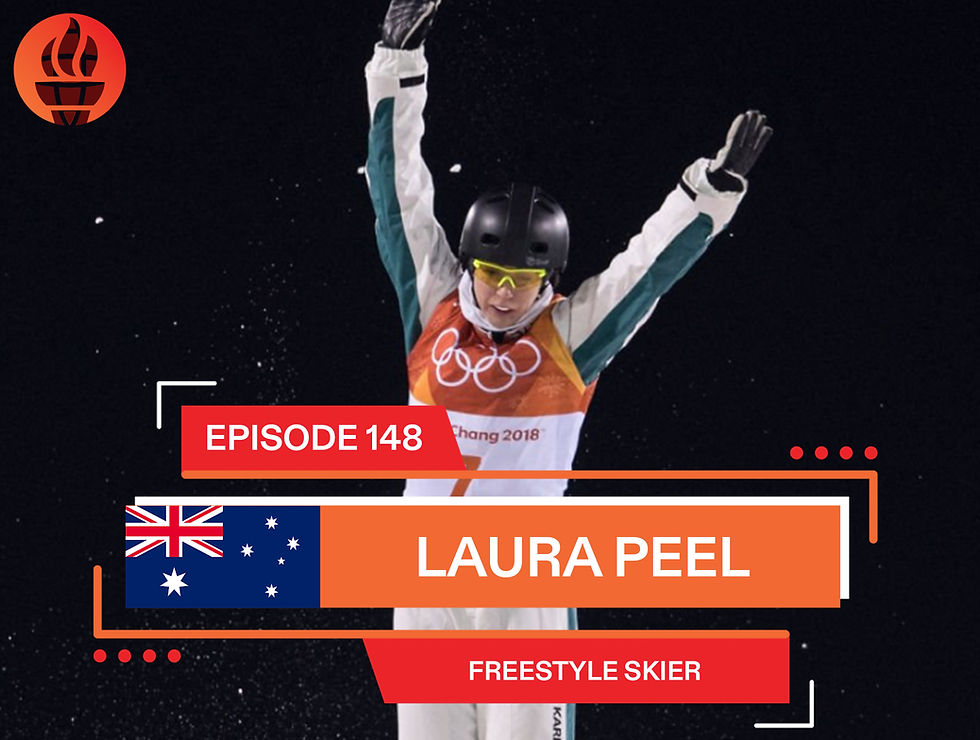
BEN WATERWORTH: Don't feel right. Don't feel right. Actually, one other question quickly. We spoke to Laura Peele, aerialist recently. And whenever we get an aerial skier on the show, it's always they were a former gymnast. They got recruited. They're doing aerial skiing. Now, my question to Laura was how come we get all this success in aerial skiing, but we can't seem to translate into gymnastics. So I'm just saying right now, Emily, should Jackie Cooper come knocking, Lydia Lassler like, hey, like we want you for aerials. Can you just say no, so that we can actually keep a gymnast in gymnastics in this country so that we can get some, no disrespect to our aerial skiers, but I just feel like they're just stealing all the talent. So I mean, just say no to aerial skiing, Emily.
EMILY WHITEHEAD: Yeah, no, I will be saying no. I love skiing and I go, like I'm actually was due to go like on Sunday to the snow, but unfortunately lockdowns had to change that a bit. But I'm not the greatest at aerial awareness when it comes to like twisting so much. So I don't think aerial skiing is quite for me.
BEN WATERWORTH: All right. And I also, I think too, that you should get everyone in gymnastics, start going up to Brisbane to the Jeff Henke Centre and watching the aerial skiers and go, okay, we're recruiting them to gymnastics. Let's play the same game that they play with you and then steal some of them. So I'm just saying, it's got to balance out somewhere in the sports, right?
EMILY WHITEHEAD: Yeah.
BEN WATERWORTH: Too many stealing of gymnasts. I don't know how it's going. Now we close out every interview, Emily, a series of fun questions. As we always explain, these are based on a Team Canada questionnaire, which they gave their athletes ahead of Rio and Pyeongchang. We always like to use a questionnaire based on an athlete from the same sport. And the only gymnast that they ever did on their website was for Rosie McLennan. So we're talking trampolining here, but it's gymnastic. It's as close as I can get. I was going to do an aerial skier, but I'm like, no, screw those guys. So let's, we love the aerial skiers. Please keep coming on the show. First question to you. The greatest Olympian of all time is?
EMILY WHITEHEAD: Simone Biles.
BEN WATERWORTH: Simone Biles. Great answer. This is a question I always dread asking, particularly our younger guests, because it always makes me feel incredibly old. What is the first Olympics that you remember watching?
EMILY WHITEHEAD: 2008.
BEN WATERWORTH: 2008. Yeah. I thought you were going to go for London there, just based on it, but no, it doesn't make me feel quite as old with that one. If you could be any superhero, who would you be? We can create a new one, like a gymnastic superhero or something like that.
EMILY WHITEHEAD: Probably Spider-Man.
BEN WATERWORTH: Yes. Yes. Spider-Man would be great at gymnastics.
EMILY WHITEHEAD: Yeah.
BEN WATERWORTH: You know, I could see him doing that. That would work. And hell, next competition, wear a Spider-Man outfit. I mean, it's the Lycra. It's kind of very similar, right? Like you just need to add the mask.
EMILY WHITEHEAD: Yeah.
BEN WATERWORTH: Why not?
EMILY WHITEHEAD: Why not?
BEN WATERWORTH: Yeah, exactly. What is your favourite ice cream flavour?
EMILY WHITEHEAD: Mint chocolate chip.
BEN WATERWORTH: Nice. Yes. Good one. I like it. If you were a baseball player, what would your walk-up music be?
EMILY WHITEHEAD: Oh, I don't even know.
BEN WATERWORTH: Can you have sort of, I guess, pump up music going in the locker room? Like, do you and Georgia sort of share some AirPods and go, okay, this is going to get us in the zone? I mean, things like that before going out there to compete.
EMILY WHITEHEAD: Pretty calm. We often like stick to ourselves and we'll just put our own headphones in, play whatever we like. I mean, I just listen to like whatever's like in the top, whatever, at that time. I don't know, but do love a bit of The Greatest Showman. That's all I listen to.
BEN WATERWORTH: Yes, they kind of have a bit of that, you know, this is the moment you've been waiting for. Yeah, I can see that works. Like that's got to get you spurred on, right? And then when you do well, you have the whole This Is Me song, like, yeah, come on, let's do it that way. And they've added more lyrics to the floor routine now, right? Like it used to be very instrumental. Can you have lyrics on the floor routine now?
EMILY WHITEHEAD: Look, I'm not entirely sure, but I do think you can have like a tiny bit.
BEN WATERWORTH: Which does that help or hinder? Like, I don't know if that would even make a difference when it comes to competing on the floor.
EMILY WHITEHEAD: I don't think it makes a difference, but I do think if you have a song that's like catchy, you kind of draw more attention to it, I guess.
BEN WATERWORTH: And just on that too, given that so many, when you're competing in a competition like that, you're on the beam, there's somebody else competing on the floor. I mean, does it get distracting? Particularly if there's a crowd there and all of a sudden someone's cheering like a massive routine on the floor, but you're trying to compete there on the beam or something like that? Or is that part of that mental training that you really have to kind of learn how to block that noise out when you are competing at the same time?
EMILY WHITEHEAD: Yeah, definitely part of the mental training. I mean, back in the gym, we'll do somewhere. Like, there's always someone, another group in the gym. So, you know, if they're on floor and I'm on beam, like their floor music's playing. So it's kind of like normal. I think for me, it's different if there's no music playing and I'm on the beam. So I guess we'll just play around with a bit of both just to try and prepare for whatever's to come.
BEN WATERWORTH: I'm intrigued for this one. What is the best nickname you have ever been called?
EMILY WHITEHEAD: I mean, my nickname's M. But for a long time, one of my coaches called me Anemone just because I don't know. She couldn't quite say Emily, so that's just how it came out.
BEN WATERWORTH: I can't even say that word. Like, how can you not say Emily? Wow, geez, that's skills. If you weren't an athlete, what would you be?
EMILY WHITEHEAD: Can't see myself not being an athlete. Like, to me, if I wasn't in gymnastics, I'd be like running or something. Like, I'm such an active person.
BEN WATERWORTH: So post-gymnastics, maybe aerial skiing does come calling. Yeah, yeah, okay, we're trying to steer away from that. What is your guilty pleasure snack?
EMILY WHITEHEAD: I don't know, like, I don't look at food as like guilty pleasure, but like a junk food snack would maybe be like a raspberry white choc muffin. Or an apple crumble.
BEN WATERWORTH: Nice.
EMILY WHITEHEAD: Like I love apple crumble.
BEN WATERWORTH: Are you allowed to have during those, you know, days at the gym, or are you kind of very restricted on what you can and can't eat?
EMILY WHITEHEAD: No, it's definitely like, I don't know, you just eat to fill your body and you don't restrict yourself from anything. So, yeah, I don't know. I always allow myself like a treat, not every day, but like at least like maybe twice a week, I'll have something delicious. It just depends really.
BEN WATERWORTH: Yeah, exactly. Personally, the Olympics, you're allowed to treat yourself to something good in the village, right? Like you can just eye off that place that you weren't eating at beforehand. And okay, personally, the Olympics, I'm going crazy. All right, just fill my tray up. What is your favourite sports movie?
EMILY WHITEHEAD: Oh, no, I don't know like names.
BEN WATERWORTH: I was thinking the cliche gymnastics answer of Stick It, but I don't know how well regarded that is in the gymnastics community.
EMILY WHITEHEAD: I mean, I do love Stick It just cause I like, I know it is my sport, but I can't think of the name of another movie.
BEN WATERWORTH: We can come back to it if it hits you, if it comes back there, things and all that. The other one I used to love watching was Make It or Break It. Again, is that sort of one of these ones that is sort of frowned upon in the gymnastics cause it's like sort of a bit of a fictionalised version of gymnastics. It was like, hey, we've got a TV show about gymnastics. We should love this.
EMILY WHITEHEAD: Yeah, I'm not really sure like I have watched them. It is funny how like unrealistic, like parts of it can be so.
BEN WATERWORTH: Yeah, yeah. That's always the kicker, isn't it? When they sort of bring that attention to it. Speaking of TV shows, what is the most recent TV show that you binge watched?
EMILY WHITEHEAD: Well, at the moment, we're watching the arrangement on channel nine.
BEN WATERWORTH: Yep.
EMILY WHITEHEAD: And Outer Banks, obviously.
BEN WATERWORTH: Nice.
EMILY WHITEHEAD: Yeah, I watched that in quarantine.
BEN WATERWORTH: I was gonna say, quarantine is kind of that perfect time, right? Where you just get to a point, it's like, let's just watch a bunch of stuff, right? Like kind of go along those ways. Where is your favourite place in the world to compete?
EMILY WHITEHEAD: Probably, somewhere in Europe, like anywhere in Europe. I've done a few comps out that way. So I know it's just such an, it's so different to like the typical Australia, America, like atmosphere. So yeah.
BEN WATERWORTH: Perfect. I like it. Final one for you here today, Emily. What is your biggest fear in life? Big, deep question to end the questionnaire on.
EMILY WHITEHEAD: Living with regret. Like you, because you can't change that, right? Like, yeah, I want no regret in life.
BEN WATERWORTH: I like it. That's an inspirational message there to close it out on. Emily, we mentioned your Instagram, social media. Where can people follow you? Where can people stay up to date with what you're up to and see some great, you know, upcoming videos, which we know that you're going to be filming?
EMILY WHITEHEAD: Definitely my Instagram is one that I'll continue using. I don't really use any other social media that much.
BEN WATERWORTH: So what's the handle? Just search for Emily Whitehead or?
EMILY WHITEHEAD: It's Emily underscore Whitehead underscore.
BEN WATERWORTH: Perfect. There it is. Emily, it's been a lot of fun chatting with you today to learn more about your career, the Olympics, gymnastics, everything along those lines. And yes, to give you that warning of just stay away from those pesky aerial skiers who keep coming and stealing all the gymnasts from all the gyms in Australia. Emily, pleasure to chat with you. Thank you for joining us on the show today.
EMILY WHITEHEAD: Thanks for having me.
BEN WATERWORTH: And a massive, massive thanks there to Emily for her time. Lot of fun, and it kind of just makes me want to watch Sticker To Maker To Break It again. It's been a while since I've watched those, and it'd be fun to watch those shows with a gymnast, just as Emily said there, to kind of pinpoint the unrealistic nature of those sports. So maybe that's one thing we can do in the future. We can get a sports movie commentary by actual athletes on this show. That would be a fun little project to do one time. But again, Emily, thank you so much for your time. It is a pleasure to chat with you. Now, our next episode, I can gladly say is a big one. It is our 150th episode. We're gonna be celebrating all the last 49 episodes and everything else in between. Of course, we do this every 50 episodes, kind of add a bit of a clip show to the fray. And given that we are in the midst of a great run of interviews, you know there's gonna be some highlights from all of the interviews that we've had recently. And of course, all of the highlights from the Tokyo Olympics. Remember those? They seem like a world away now, but we have highlights, clips from every single day. We've got commentary packages. We've got everything. It's gonna be a long episode, but it's gonna be a fun episode too. So perhaps if this is maybe the first episode you've listened to, you haven't caught up on any of our past interviews and episodes that were done. It's a perfect starting point, a clip show for you to listen to bits that were funny, at least in our eyes from the last 49 episodes. And if you like what you hear in the next episode, you can of course go back and listen to our 100th and our 50th episode, in which we do a similar thing. We play clips from the previous 49 or so episodes that proceeded to that. So that will be our next episode, episode 150, the best of Off The Podium, part three. And then we'll be back into the swing of interviews, plenty of big names coming your way. As we get winter, we get summer, we get everything else in between, non-athletes as well. Sort of speaking to some behind the scenes people as well, keeping it all very fascinating on this show. And as always, if there's anybody you'd like us to track down, anybody out there that you would like us to try and get on the show, shoot us a message on social media, search for Off The Podium on Instagram, Twitter and Facebook. And we'd also like to hear any other ideas. Maybe you've got an idea for a show theme or a subject you'd like us to cover in a special episode or anything along those lines. We're always open to ideas on those platforms. And of course, subscribe to the show or on all the podcast platforms out there. Search Off The Podium. Leave us some feedback. We'd love to hear what you think of the show. And we appreciate all the support that we get out there. We love it. And we're gonna keep on bringing you these episodes. And we hope you stay tuned and keep on listening to the show. Big thanks again to Emily. My name is Ben. This is Off The Podium. And we'll speak to you next time. Good night.


Comments