


Tristan Thomas Interview
Another exciting interview coming your way today as we sit down with Australian 400m hurdler Tristan Thomas to talk about his amazing career in and his time at the 2012 Olympics! In one of our most personal chats to date, Tristan opens up about the unique way he got into the sport and the 'sliding doors' moment that very nearly saw him not go down the path as a runner. He also talks about his experiences at the Olympics and why he looks back on it differently, as well as the various challenges that came after his time in London. We also hear from Tristan about the athletes to watch out for at the Tokyo Olympics. It's a fun, informative and open chat you won't want to miss!
EPISODE TRANSCRIPT
Please note this is an automated transcript that may contain errors.
BEN WATERWORTH: It is Off The Podium, an Olympics podcast coming to you today for another interview episode. Our last interview before the Tokyo 2020 Olympics. That's right, we are days away from the Tokyo Olympics. You're about to hear our in-depth coverage of those games very, very shortly. But before we get there, before we get into Tokyo, let's take a chance to chat to an Olympian who isn't going to Tokyo, but has competed in Olympics before. The London 2012 Olympics, to be precise. And the man's name is Mr. Tristan Thomas, a man who you've technically heard on this show before, back when we did our Brink Vault series. I interviewed him many years ago for another former radio show of mine called The Brink. We played that little chat we had with him. But this is a lot more in-depth, a lot more into his career, the nitty gritty of how we got into the sport, the unique way he got into hurdling and sort of the journey that that took him along the way. It's a fascinating journey for Tristan that took him to an Olympics, but it has also taken him to world championships, Commonwealth Games, the university games, and the medals and the success that he's had along the way. And a very honest and raw account of an athlete's career and a journey that it takes them on from a very interesting and fascinating story from one of these sliding doors moments, as Tristan puts it in this interview, to how his entire life could have changed simply by laying in bed one morning right through to where he's at today and a bit of a closer look at who we should be keeping an eye on in the athletic scheme of things ahead of the Tokyo Olympic Games. This is a great chat, and I know you're definitely going to enjoy it. Here is my chat with Australian Olympic hurdler Tristan Thomas.
BEN WATERWORTH: We are only days away now from the Tokyo Olympics, and excited today to bring you in what will be our last interview before the games, last chance to chat to an Olympic athlete, to learn about their time at the Olympics as well as their career in general. And our guest today is a runner, a 400-metre hurdles specialist who competed at the 2012 London Olympics. Outside of that is a bronze medallist at the World Championships, being part of Australia's 4x400-metre bronze medal-winning team at the Berlin World Championships in 2009. Outside of that, he's a four-time 400-metre hurdles champion in Australia, a Commonwealth Games athlete, a university gold medallist-winning athlete as well, the Univers Aid back in 2009, and a guy who I've actually had the pleasure of doing something like this a couple of times, before chatting to him and exciting to be able to chat to him further today about his esteemed career. It's a pleasure to welcome Off The Podium Tristan Thomas. Tristan, welcome to the show. It's a pleasure to have you today.
TRISTAN THOMAS: Thank you for having me. It's kind of been so long. It's nice to hear those accolades streaming off Wikipedia, and it's good to hear they haven't been replaced by that bloke.
BEN WATERWORTH: Yes, I was going to edit them and say, four-time Olympic champion, world record holder, things like that. I thought I can still do it if you want me to. That's always something you can share just with random people. Hey, check my Wikipedia page out. Look how good I was.
TRISTAN THOMAS: Yeah, well, I was going to say it was five times.
BEN WATERWORTH: Oh, sorry, geez. Thank you, Wikipedia. Actually, I don't want you to blame Wikipedia for that. I want you to blame The Examiner. There was the article that I was getting that off because I thought, no, we won't go Wikipedia for that one. Blame The Examiner. That's all I can say.
TRISTAN THOMAS: And to be honest, it's kind of there. They're a bit hollow because a few of those races were, I didn't win the race, but the people who won the race were from another country. So you kind of, I mean, it's unhappy to take whatever I can get really. So yeah, good time.
BEN WATERWORTH: Take it. Take it. It's all right, Tristan. It's fine. It's all good. It's obviously been, I guess, a while since you sort of were competing out there. And I know sort of when you and I talking to each other about kind of doing this interview, it was sort of like the way you're very humble about kind of your achievements and humble about your sort of athletic career. I mean, does it seem like a world away that it has been so long since you've sort of been competing on that stage that it almost does seem like a different life ago?
TRISTAN THOMAS: Well, I guess it depends on the tone you want to take this interview. I think a lot of athletes probably go through this phase where, you know, I'm still young enough. You know, I'm a schoolteacher now, and I go into class and people are always sort of shocked by my age. They all think I'm younger. But I still feel like it wasn't so long ago that it was a lifetime ago chronologically. But I just can't do anything I used to be able to do. And I think that's the saddest thing for me was in the last couple of years where I was considering myself an athlete, an elite athlete, I just my whole physical physiology or biomechanics or biochemistry or whatever it was, just changed to the point where I just couldn't, you know, I couldn't do what what made me special. So I've never been the biggest guy, I've never been the fastest guy, but I was that guy that could maintain top speed for the longer longer period. So I would go out 100 percent. And, you know, because I was quite efficient, I was still able to come home and I would run over the top of people in the last 50 metres. And I think, you know, if you look back to the last couple years I was running, I didn't have them anymore. And I felt like, you know, how a lot of people feel when they're doing sport and that you get to a certain stage and then you realise there's holes in the bucket and it all just falls apart and you just can't finish races. So, the last couple of years was so frustrating and so, you know, it was a real kind of soul searching to see what I really was. So, when that is your final memory, you know, it all declines from there. And at the right old age of 35, I feel like a 90 year old, to the point where now if I go in a school and I might be there just watching a rugby training or whatever, and I keep my ass to race, and I very rarely do it, but if ever I do, I nearly lose to these school kids, and it almost feels like a fraud. But at the same time, I've got to keep reminding myself that there were some really amazing times, and, you know, start to look back over these videos, or, you know, we just moved house, so I had a big box full of all my old athletic stuff, and, you know, I had some letters from senators or from the head of Athletics Australia from 2009 when I was really running well, and some of the messages on the sheets were like, great year Tristan, medal in London 2012, question mark. And, you know, at first when I read that, I was shattered because, you know, you just want to turn back time and go back to those moments where it is all possible, because it really is blessed life and self-esteem is great and, you know, it's amazing. And I had some moments where it was a really hard thing to almost be grieving for the loss of what was. But at the same time, as I said, you do have to take stock and realise that, you know, I was really lucky. And I did have a great talent. And, you know, as you said, reeling off those achievements at the start, you know, so few people can say they've medaled at a World Championships or even World University Games to win that time. You know, a lot of athletes do represent their country and, you know, then some get a lot more accolades in terms of fame and they'll be on the TV and whatnot. But to be able to say you're a medallist, one of these things, I actually don't think people in the public realise how hard it is to get that. And it's something that, you know, as a fan of Harry Potter, I always think about what would my set of Horcruxes be? And I do have a couple of Horcruxes that I'm pretty proud of. So, yeah, you know, there's always highs and lows. But whilst it does feel like a life ago, it certainly was a life I'm still fond of for the good parts, rather than the bad.
BEN WATERWORTH: Any reference you can get to, like, Harry Potter, I appreciate that, Tristan. Good job. Like, it doesn't happen enough in the show. So, you know.
TRISTAN THOMAS: I actually went and saw a Harry Potter two-man show last night.
BEN WATERWORTH: Oh, was that potted or some potted potter or something? Yeah, I remember having those guys on the show on my radio show like years ago. They were fun. Yeah.
TRISTAN THOMAS: I don't know. We'd just been living in London for the last two years, and we saw a parody. It's such a great place for theatre. We saw a parody of Voldemort's teenage years at Hogwarts, and it was hilarious. And I think I'll always be comparing things to that. So it was good. It was good last night. I recommend. Kids loved it, and they were all sort of all the things I found a bit. You know, they dragged on a little bit. The kids were all quoting those exact moments straight after. So, you know, it's appropriate. But yeah, look, it was good without being the highlight of my life.
BEN WATERWORTH: Anyway, that's good. Yeah, it's often what people say about being on this show, too. So I'm sure you'll add that to that list at the end of it. You're journeying into kind of what led to, you know, World Championship, bronze medal, Olympics, everything that I was saying before. You were, I guess, quite late to it. You were sort of, you know, not pursuing this. This kind of almost just happened your athletics career, didn't it? You were approached by essentially a coach at a school meet. I mean, tell us a little bit about how all that played about. And before that, were you, you know, what other sports were you kind of pursuing? Was this sort of like you were always wanting to be an athlete, and it just kind of athletics turned out to be the sport that you fell into?
TRISTAN THOMAS: It's a great question. I certainly didn't grow up running. I, as I showed you off there, I'd moved around a couple of places when I was a kid, within Tassie, then when I lived in Ireland for a couple years. And I grew up in a neighbourhood that Roy Keane grew up in. Bit of a dodgy ghetto. I didn't know at the time when I tell people from Ireland that I lived in Mayfield, they're like, ooh.
BEN WATERWORTH: If Roy Keane's from a place, then you know it's going to be tough, right?
TRISTAN THOMAS: They breed them tough in Mayfield. But anyway, I wanted to play football or soccer for Ireland at one point. And I guess I never had the exposure to athletics. My family aren't. I love my family, but they're no buts. However, because it's much better than but, they aren't sporty. You know, they, actually, to be honest, my dad and stepmom and my sister, they're obsessed with AFL, which is my biggest criticism of Tasmania. I don't mean to criticise Tasmania, but I dare say there are other sports out there, guys. And if you give them a go, you might even be, maybe even happier. Anyway, so in terms of that...
BEN WATERWORTH: Get on the jack-jumpers, everyone. They're about to start in the NBL. Come on, there you go. Basketball is taking over instead of footy.
TRISTAN THOMAS: I don't hope for any of yours, but I don't know. I guess going back to that World Champs comment, there are some athletes that have done some amazing stuff, and no one even knows who they are, because they don't keep a Sharon around. And football is great, but I think in some ways, you look at the Essendon drug scandal, and you just realise sometimes sport is bigger than our own little home game. And I'm sorry for jumping around a little bit, but I'm reading a lot about an American sprinter who you may have seen recently tested positive for marijuana straight after the 100-metre trials. And she's admitted it, and she was going through a hard time. Her mother passed. And there are so many people coming on social media saying, oh, let her run, let her run. You're racist. It's because she's black. And it's got nothing to do with that. It's just at the Olympic level. The Olympics is such a beautiful thing to be part of. It's got so much history, and it's the best of the whole world. And it's really a festival of human endeavour. And I just think sometimes people in these... You know, America is very into American sports, and Australia is very into Australian sports. Well, not all of Australia. I just think Tasmania stops football. I just think sometimes I'd love it if... You know, we've looked beyond bigger picture stuff. So anyway, getting back to my story, it's a very big aside.
BEN WATERWORTH: It's all right. You're fitting well in this show. It's what we do all the time. Again, we've gone from Harry Potter to kind of regional sporting thing, whilst also talking about your career. So it's very standard on Off The Podium.
TRISTAN THOMAS: And getting all Tasmanians offside in one go, which is...
BEN WATERWORTH: That's all right. Both of us are fine. It's all good. It happens.
TRISTAN THOMAS: I mean, I guess if they want to come and get me, it's hard with the Border Patrol. But anyway...
BEN WATERWORTH: You're in a safe spot right now. You're in a lockdown area. If they can't get to you, you're safe.
TRISTAN THOMAS: And again, it's a story of another day, but coming back from London where, you know, COVID is a real thing, that, you know, they've got hundreds and thousands of people that have died. And it's certainly been an interesting year.
BEN WATERWORTH: Canada, Australia, very similar. I remember that first day out of quarantine, where all of a sudden, no masks, everyone's surrounding you. It's just completely... You're like, what the hell is going on right now? Why are people next to me?
TRISTAN THOMAS: And look, don't get me wrong, I know people from Melbourne have had a few months, and that's always the rebuttal whenever I mention my girlfriend's 10 months without work, being furloughed and basically me teaching online for eight months of the year last year. But yeah, look, I know everyone's going through their own stuff. But to go back to the story, I didn't run as a kid. I did a little athletics for two weeks. I guess, I don't know why, I didn't have that sort of greater goal behind me at the time. And I remember the time, and we may have discussed this many years ago, but I remember my first moment of really, you know, being introduced to athletics really was going to year seven. And I still was the redhead kid with the really strong Irish accent and pasty, freckly skin. And look, I remember being on a school bus and sort of being kicked under the seat and being quite frayed and all that kind of. So look, I wasn't a popular character, but I remember being at my dad's house and thinking I might try out for the four by 100 metre relay team at school. Now, I hadn't at a school carnival. I wasn't even in the first division. I think I was in division three or four because I didn't have the courage to say that I should be any higher or, you know, I'll try to be the quickest for my house. So I was in like, as I said, division three or four, and with no accolades and no sort of, you know, no one pushing me really at all. But for whatever reason, I wanted to do something and I maybe I wanted to be somewhat special in some regard. So I just thought I'd try out for the four by 100 metre relay team. And in my head, and I don't, I'd say this with no point of a lie, I just wanted to get the fourth fastest member, so I could be on that team and be part of it. And I remember thinking in bed, it was 6 o'clock in the morning, 6.30, freezing cold, beautiful tazza morning, and actually contemplating not going. I actually remember sitting there going, do I bother, like, what am I even doing this for? And, you know, is this really important to me or not? And looking back now, I kind of feel like if I hadn't done that, and I hadn't gone, I never would have been pushed into athletics, and I never would have done it. And, you know, as I said, self-esteem wasn't very high, and I wasn't doing very well at school. Well, it wasn't bad, but I didn't have any confidence. So I'm really, you know, we're only here because of that moment. But I did decide to go, and I went to track, and I ended up winning the trial. And again, it's just some virgules. It's just, you know, a bunch of school kids. It's not like we were in one of the big athletics performances in the world. It's just a thing. But I remember, like, the shock that I had, because I had no expectations at all. And I remember getting on the bus to go to school, and I felt so good about myself. And people started talking at the school, and they said, Oh, did you Tristan Thomas? Who's that? He's the fastest in the grade. It was the most unexpected thing that had ever happened, and it was nuts. It was a movie. It was a miracle. But I obviously then made the team. I was in the team for the 100. I had PE teachers saying that I'd never be good over any distance more than 100 metres, because my technique was like praying mantis, and I was horrendous. But you know, it was... Going from the guy who was sort of quick on, not like majorly, I had friends and whatnot, but going from that to, you know, that time of year, you were the man. And it really, it changed me. But I went to training. Obviously, the school trainings had three mornings a week. And that was the time where, as you said, a coach approached me and said, would you be interested in doing some real athletics training? And again, you know, being quite shy and not massively confident, to have someone show that kind of faith and interest, it meant a lot to me. And his name was Kevin Cranigast. He coached a guy called Simon Hollingsworth to become an Olympian who wanted to win the hurdles. And he had history in taking kids from my school, because this guy was a school hero, to the Olympics. So to have the coach that coached him take me on, yeah, it changed my life, really.
BEN WATERWORTH: It's crazy, Tristan, to think that you can pinpoint everything to one morning laying in bed thinking that, do I do this today or not? I mean, we all, I guess, have moments in life where you can almost say, well, if I had it done this differently, I would have been on a different path. But for you to literally be able to say, I was laying in bed one morning thinking, fuck this, I'm not going to do it. Like, how crazy that is to be able to pinpoint everything to one moment.
TRISTAN THOMAS: It's nuts. And yeah, I mean, if you think of the movie Sliding Doors, great movie, really. Haven't seen it. Kids of the new generation go out there and get a VHS or some crazy millennial technology. Watch Sliding Doors, it's amazing. But it really is like that. As I said, I wasn't very good at school. I didn't do very well. But once I started training, and sort of another really big change in moment was, well, at one point, I actually asked my coach, do you think I could make the Olympics? And I think I was in year eight at the time, or year seven. Or no, year eight or year nine. And he just sort of laughed it off and said nothing. And I was probably a bit sad by that. But he came back to me the next training session a couple of days later. And he said, you know, Tristan, I thought a lot about what you said. And if you really work for this and you wanted enough, I think you could make the Olympics. And again, like that's another moment where that one conversation where he decided to come back and say that to me was enough to turn me into this person who believed and was willing to do whatever it took to get there. So between those two conversations or those two moments, I then, you know, through athletics, and this is one thing I always try to tell people, is sport can actually make you do better academically. Because if you truly want to be great in your sport or in music or any of these endeavours, you need to practise what you're not good at. And that really will be the distinction between people that go all the way and the people who just don't get there, is that you really got to work through your weaknesses and turn them into strengths in order to become great. So I went to school, and a kid who hated science started just trying. And started, rather than putting this negative spin on everything, I became more assertive and more productive and sort of just had a mentality of, you just got to try, you just got to work through it. And nothing is a weakness. It's just a challenge to get where you need to go. So to get back to your point, if I never did athletics or I never did anything like that, I would have been a very media student. And I probably just would have been a guy who got a normal job and was going through a lot of midlife crisis a lot earlier. But because of athletics, I got an academic scholarship and went to a nice school and then got a scholarship to come to Canberra and train the AS. So it's amazing. I've never really had someone talk about it, but that moment really was much more than a decision to go to the track.
BEN WATERWORTH: The one thing I always like to do when I'm talking to athletes from Tasmania and similar age to me, you're a year older than I am, Tristan, it's kind of to think about these moments where maybe I could have had a chance to go up against you at some point. But I will say as a Newtown high boy who used to run in about the 10th division of the 100 metres and often come last, I feel I never had that opportunity. So it's all right. You had no threat from me when you started your athletics career that I was going to stand in your way of your Olympic ambitions. You're welcome. I helped you out.
TRISTAN THOMAS: Well, to be honest, I don't know. Maybe you're only in 10th division because you didn't have the confidence to say you should have been in 9th division.
BEN WATERWORTH: True. Yeah, I held myself back. I knew I was too good for those.
TRISTAN THOMAS: If you had got out of bed that day, you could have been anything. You could have swapped positions and I could be the successful one.
BEN WATERWORTH: Well, I think I bring this up because I like to credit Eddie Ockenden for doing as well as he has over the years because he was kind of the chubby goalkeeper. He used to play against him all the time back in the day in his junior hockey careers. I think he used to score about 10 goals against me every single bloody match. I'm like, you're welcome, you got shooting practice as a teenager against that fat goal of the Prince of Wales. So without me, you wouldn't be the best hockey player in the world. You're welcome, Eddie.
TRISTAN THOMAS: Well, I mean, I don't want to get into it for weight. And you're certainly looking a lot better now.
BEN WATERWORTH: Thank you.
TRISTAN THOMAS: Thank you. You said, Your Honour, the keto diet and why I would maybe argue for one little less meat in it. It's obviously working for you. So without being negative on yourself, I think maybe you did help him. Maybe he had such a small target in which to get around you that, you know, these things in life, I just think it's amazing. I don't want to get too philosophical, but there are a lot of things that are placed in front of us to give us opportunities. And, you know, if I want to go to my idea of religion and whatnot, I do think we can control our destiny. But I do think we are given gifts and we've given moments and opportunities. And really, like, everyone has them. And I speak to a lot of school kids as a teacher. And my message to all of them is that you are all super talented at something. You are a freak at something. You just need to find what that thing is. And you just need to take these opportunities when they come. So if they're a tuba player, and I'll use your words, or not your words, but your impression, is there's a larger person with more air to push through that tuba, that's got to be the driving thing to get this young tubist, tuba-tuberist, to push harder and get better. And again, one other thing I would say is to be able to offer something to the younger listeners. It's a big difference between someone who is very good and someone who is sort of great and a champion in some ways, is the ability to deal with these setbacks or challenges and to be able to take in the feedback. I think more and more people these days, they don't want to hear negative feedback, but there is no greater gift in the world than being told how you can do something better in a constructive way. And I think one thing Athletics has taught me is, and it's a message for life, I'm telling people close to me all the time about this, it's take what people have to say in and use these opportunities, whether they've gone good or bad, and learn from everything and allow yourself, and don't be so arrogant to think that you can't learn from opportunities. And it can all come. You have the potential to do great things. You've just got to be able to use what's been given to you and find out what you need to use.
BEN WATERWORTH: I love getting deep in it. It works so well to get all this advice. It helps our listeners learn so much on the show, essentially. You mentioned, obviously, you try out for the four by one, and that you're not really going to be able to do any other distances because of your praying mantis style. At what point was this from the coach that all of a sudden said, well, why don't you try going for 400, and then how did that then lead to 400-metre hurdles? Because I always like to think when I'm watching hurdle athletes that there has to be some point in your career where you go, yeah, I just want to jump over a piece of wood and make it harder for me than rather just running in a simple circle. Because I don't know, is there just something that clicks in the brain that thinks you want to make it harder for yourself, or do you legitimately like the prospect of falling over a giant thing in the air and tripping over flat in your face? I don't know how it works.
TRISTAN THOMAS: Again, a great question. For this line of thought, I don't want to become too sort of wanky, philosophical, this is how you do it, but your question leads into the next point almost perfectly. I think I naturally, once I started training, obviously the coach was able to see that there were physiological benefits to me running longer. I think realistically when you have a PE teacher tell you that you can't do more than 100 metres, their sort of expectation is no more than a school carnival athlete who's going to take some visuals to winning the cup. Whereas when you do then get into a real athletics environment with a coach who's taken some SEA Olympics, they're able to and they need to be able to see these things to a much deeper level. And it was probably obvious from very early on that I was not actually going to be a 100 metre runner. I've got long legs, I don't have a lot of strength. If you saw me in the streets on the one hot day in London in a year, not that I'm back there now, but I've got tiny arms, I'm not strong, and biomechanically I'm not a 100 metre runner. So it was always going to go down that way being sort of 400, or potentially the missed opportunity is the 800. But in terms of hurdles, it's almost the opposite to what you said. So you suggested that potentially I had done hurdles, because I really liked the idea of making it harder for myself. But one of the biggest things I say to anyone is you've got to be really aware of what you're made to do. So I always say to people, everyone wants to be a 100 metre runner, especially in this country where the athletics is so low on people's understanding. There are some athletes in this country right now who are seriously amazing people, amazing runners, and they could medal at the Olympics in events that are so stacked full of amazing runners from around the world. These people aren't known. No one knows who they are. Everyone just wants to see what the 100 metre runners are doing. What's your 100 metre time? It's so upset. So everyone wants to be the 100 metre runner, but there are so few people in the world that are built to run the 100 metres. Or if you're a football player, so few people are built to be the full forward or in, what's it called, when you're a midfielder, one of those midfield people. And to be honest, you've got to be aware of what you're made to do. So, for me, I was not going to be a 100 runner. I was going to be someone a bit longer. But having a coach who had coached a 400 metre hurdler, I actually went to Nationals as a 15-year-old in the 400. And by that stage, I was running fairly well. I'd won a lot of these school carnivals. I was in a point where I thought I was decent. And it was after my conversation with the coach and whatnot. And I went to Nationals, and I had a personal best, and I got fifth. I got fifth in the 400. And I just, again, I can distinctly remember thinking, these guys are too big, and they're too strong, and they're too talented, and maybe I won't make it. And if I want to make it, and I want to become an Olympian or become someone in this sport, I need to do something that the good people won't do. So it wasn't a matter of me going, oh, jeez, I would love to go and fall over hurdles. It was more that just when the best runners wouldn't do it. The best runners would just run 400s. And I don't necessarily think that's the case now. Some of the four hodlers in the world at the moment are probably... There's two people who just broke the world record. The men's and women's world record and the four hodlers just went. And both of those events have got three people that are in the top five all time fastest. So four hodlers is very difficult and it's a well-respected event. But for me at the time, I just went, you know what, I just need to do something that I think gives me a part. So I remember my first hodl session, and I said to my coach, can I give hodlers a go? And I was so bad. I was shocking. I was like, I smashed into the hodl. I had no idea about depth. I was completely uncoordinated. But again, it was a mind frame where I just stuck at it. And luckily for me, and again, this is what I'm saying with the whole idea of the spiritual whatever, I just got lucky in that my stride was perfect for 400-metre hodls, or certainly to a point. It kind of broke down. And I can talk about that later. In big races, I want to do other things that didn't work. But as a junior, I was a natural fore-hurdler once I learned how to do it. And very quickly, in the space of two years, was winning national titles on a junior level. And luckily got spotted by the AIS coach who, again, sliding door moment, were in this exact point where they were trying to find kids that had raw talent and no idea what they were doing and turned them into Olympians. They actually had a project going where they just wanted to find random kids with no idea. And they haven't done it since, and I don't think they did it before, but I just was right place, right time. I had a coach at the time, Rita Whitehouse, who was also a great coach for me, and took me to the level where I was honing that crap in for hurdles. And she wasn't arrogant. She wasn't possessive. And when my coach in the AIS asked to have a chat with me, she was more than happy for that to happen. And yeah, he sat down and he asked, you were running 13 strides per hurdle down the back straight. That's amazing for a kid. What do you think about that? And my answer was I didn't even know what that was. I was like so raw. I just was running and jumping when the hurdles came. So yeah, I got really lucky. He probably liked the fact that I had no idea what I was doing. And yeah, I got a scholarship a couple of years later. Fantastic. Yeah, small moments, right choices.
BEN WATERWORTH: It's interesting you sort of mentioned about, you know, to say with athletics, it's sort of the 100 metres, it gets all the glory. You know, I mean, obviously, the Blue Room event is 100 metres, both men and women, I mean, days away from Tokyo. What's the one event everyone's going to stop and watch? It's the 100 metres, men's and women's, you know, and ultimately kind of that gets the attention. But it's interesting with Australia's athletics history, you know, obviously more recently, you know, not obviously taking back in the day, you know, Shirley Strickland, Betty Kaufman, those sort of people, but sort of it's more of those distances that Australians have had more success. Obviously, Cathy Freeman, you know, you think of Yana Pittman, you know, kind of it's almost at 400 metres, and particularly the hurdles of someone like Yana Pittman. And then you look at Sally McLennan, Sally, you know, Pearson, how basically she took the hurdles to a new level. So it's interesting to think that there's still that kind of notion, particularly in the 100 metres, when Australia hasn't sort of really had an opportunity to win 100-metre medals in the Olympics for, you know, 50, 60 years. So it must have been a unique sort of moment to kind of, you know, go to that level and kind of be in that aspect, when so many Australians, when we get to see athletics, be it at a Commonwealth Games and an Olympics, and when we pay attention to it, we shouldn't be focusing on the short ones, we're just focusing on you guys basically.
TRISTAN THOMAS: Well, I have made mistakes, and I remember one of my world champs. I was young and I was stupid, and I made the point that four hurdles was the hardest event to do. And I remember some of the shot putters kind of took the mickey out of me and had a laugh, and probably, you know, they thought that was a stupid thing to say, which is fair enough. So I now have an appreciation for all events. And, you know, anyone who reaches top level in any sport is a freak. And, you know, I don't want to say one event is better or worse than any other. And even in terms of 100 metres, you know, we've got two people in 100 in the Olympics. We've got Rowan Browning, who...
BEN WATERWORTH: He's getting a lot of attention, Rowan, isn't he?
TRISTAN THOMAS: Well, I mean, of course, he's a metre runner. To be fair, he's, you know, I don't think it's realistic for Rowan to think he's going to break the world record, or, you know, I think medalling would be an amazing achievement if you look at rankings. But he's very good. And in the females, we've got a young lady called Hannah Bassett, who's on the verge of breaking the Australian record for the 100. So, look, they are great runners, but, no but, however, as you implied, there are some athletes in this country who are some of the best in the world at their event. But they, you know, and the sad thing is, you've got like Stewie McSween, who is a Tasmanian, who's just ran another Australian record. He's run like five Australian records in the last five months. He ran 3.29.5 in the Monaco Grand Prix 1500 to get, I think he got second or third in that race. So he could really legitimately medal. He's an absolute freak. Sorry for thinking I was saying freak. Obviously, I said a positive. But he just won't get the attention. And it's like you said, it's 100 metres is the Blue Ribbon event. But I just don't know why we have this opinion. The only thing I can say is that everyone, when they're growing up in Australia, every single person runs 100 metres at school. Every single person has a history and has a story to tell about the time they ran 100 metres. Just like you said, in the dip from 10, and you got last, and you did a victory lap and all that kind of stuff. So everyone knows the 100. And I guess in some ways, when you don't think much about athletics, you think of it as about being the fastest person. Now, I don't want any field event people to... They will honestly and openly say it should be field and track. You want to be the longest jumper, you want to be the strongest person who can throw the longest. But in terms of running, who is the fastest person? So I get the emphasis in that regard. But as an entertainment, as a piece of footage and something to captivate an audience, the 100 metres is over before you know it. And I'm not going to disrespect 100 metre runners to say that there's not different phases. They have a really pronounced acceleration phase. They have a very clear transition from that running into open strides down to the next 60, and then there's a different phase for the last 20 metres. But we're talking 10, 11 seconds here, and there really is just get up and run as fast as you can. And the person with the greatest speed, there's not a lot of strategy. There's no strategy, really. It's just your own ability to put your project or your steps in place. Whereas, you know, something like a 400... And four hurdles, I think, is one step too far, because the audience need to be educated on that event to understand what's going on. But if there was a miracle and they were all forced to learn how it works, it is really fascinating because you've got 10 hurdles in a race. Every single person in that race is running on a different stride pattern. So some people that are a bit shorter will be... Maybe they'll be running 14 strides for the first seven hurdles, and then after that, when fatigue comes in and maybe there's a headwind, they cut down, which means they sort of have shorter strides, and they speed them up, and then they run 15 strides home, which is obviously then an odd leg, and you have to... You get to a hurdle on each... You know, your preferred leg each one. But you've got all these changes happening, and when you know what's going on, you can actually see the point at which these decisions are being made by these athletes. And I alluded to it earlier. For me, I made so many mistakes in this process, and I actually was pretty poor at my ability to put a proper race together. But when you understand what's going on, when you see these amazing athletes, they become even more impressive. So yeah, 4x4s, I think, is a really interesting thing for people to watch. And they've just introduced what I believe is potentially the most interesting of all events, which is the 4x400, but too male and too female. Yeah, yeah. So Australia didn't make it, which is disappointing because we actually have two men in the 400 and also a female and a 4x4 female team. So it just doesn't make sense. But anyway, so you've got this situation where, with no disrespect to females who I think are amazing, and my girlfriends are really good feminists, and I think feminism is very important.
BEN WATERWORTH: We're all feminists, Tristan.
TRISTAN THOMAS: Probably the racists who are having a go at those poor guys over in England and the mine probably aren't feminists. But most good people, and that's obviously a subjective thing, everyone is good and bad in their own way, but we all should be feminists, and I don't know any reason why we should have different rules for men and women. But to be statistically minded, the times that males are running in the 400 are four or five seconds faster than what females are running at this point. Apparently, there's a scientific study that shows that in the next 100 years or 200 years, evolution will take place in the way that women will actually be faster than men.
BEN WATERWORTH: Really?
TRISTAN THOMAS: Yeah, I haven't read it, but I've read the headlines and know a little bit about it. But anyway, for now, there is a difference. So when you get into these races, strategy really gets part of it, because some countries will put their two men first and then try to get a big lead, and then their women with that lead will hold on. And then others sort of mix it up, they'll go like the lady then man, the female then man. And it just becomes this really, it's almost like a peloton versus the breakaway in the Tour de France, where it's a matter of how do you sort of strategically place these cards to get the better overall performance. So I think that'll be really interesting going forward. And yeah, I think people should watch that.
BEN WATERWORTH: It's a unique way of looking at it, because one thing I love about the Olympics, winter and summer, it is the exposure to so many sports that you're not used to seeing. And kind of going back to your point about, you know, the exposure rates of sports in Australia or any country we're in, let's be honest, if you're living in Ireland, you know, football's front and centre, soccer, you know, when I was in Canada, hockey, it's front and centre, you know, you're not seeing certain things you're seeing. It's all very regional base, of course, where you are. But the Olympics exposes us to sports that we're not used to. Once every four years, you get to see 400-metre hurdles when you're not used to seeing it, you know, you get to see all these other amazing sports, which it just shows you on that level that there's so many things out there, and you get to see these amazing athletes who are working so hard in their field. I mean, you're working so hard from that moment your coach tells you, yeah, you could probably make the Olympics, that journey you go to to eventually making London. I mean, it's that exposure level. And you might not go on to be a household name where you're sort of living off every single cent and, you know, walking down the street, getting autographs and all that sort of stuff. I know what happens to you Tristan, but I'm just saying in general, it's sort of not there. But it's a beauty of the Olympics. It's kind of that's what. Yeah, exactly. But I mean, it's just it's that's that's so many things of what I love. And I love learning these things about something where I'm going to watch the hurdles and think it's just a bunch of guys and girls running fast and jumping over a piece of wood. But there's strategy to it. There's technique. There's all these elements to it which make it much more interesting when you sort of know the finer details of it.
TRISTAN THOMAS: And I think, yeah, I mean, every every every person track and field certainly goes to this point where and it's sometimes sad when you do see some of the the football codes and even I used to live with one of the basketballers who's now on the Opals team. And the amount of times those girls would come home just drunk as hell on a Sunday morning. And but it was but it was kind of a team thing. They were they were getting a team bonding and they were developing that unit. And you know that the band of sisters and all that kind of stuff. So there was a purpose. But for me, you know, we never did that. I certainly never did. I had the rare knife, but I certainly wasn't doing it regularly.
BEN WATERWORTH: Jon Stevenson did though, be honest. Jon Stevenson was out getting air all the time, right? Come on, he's that type.
TRISTAN THOMAS: I think Jonny Stevenson is so misunderstood. He is like, we talk about this bronze medal, and he's such a massive part of why I get to have that in my house. He brought us all together, and he really put that idea and that seed into our head. And he was the most positive and amazing teammate to have in that situation. So I don't think he was going... I mean, I know he's good friends with Usain Bolt, who's quite fond of going out in town, what he certainly was. He's now got kids and makes it harder. But anyway, so I was always struggling with this idea that we were so committed to this idea, this goal. And in athletics, same in swimming, same in cycling, same in a lot of sports that are sort of performance... They're all performance-based, but very like you're maximising your physical ability in a task. Whereas obviously in team sports, there's the skill element, there's lots of other things that come into play. You can have a broken leg in three goals, like Stevie Johnson and be a grand final hero. Whereas in athletics, if you're at 95%, you're dead. So for me, it was always really hard, because it doesn't have the exposure at all. Sometimes, and again, I really love my family, but even my own family have moments where they can't tell you everything about what I've done, or they know what I've done. The sport, and that's because there is no presence of these sports in society. And I do think it's really sad. And I wonder whether maybe the governing bodies, Athletics Australia, Swimming Australia, or a lot of these, they could be doing a better job to get the exposure out there, or maybe it's as a society we need to, we don't need to do anything, but it would be good if we could shift away from what we always know.
BEN WATERWORTH: Which is, just to chime in there, I mean, it's interesting how that's kind of happened over history, isn't it? Because 100 years ago, the Olympics was the absolute peak. That is the top of the pile, and things like sprinting, athletic swimming, that's the peak of human achievement, essentially. So these athletes back then were the biggest athletes in the world. And it's just kind of a case of as professionalism has come in, television, media, and kind of exposure to all these other sports, it's kind of interesting that, yeah, you've got your insane bolts out there, but I mean, for the most part, I can imagine that whoever wins the 100 metres this year, nobody in Australia would be able to tell you their name by Christmas.
TRISTAN THOMAS: No, no, I don't think they'll probably be able to tell you on the day. And Usain was special in that regard. Someone said to me recently that Usain doesn't have a very big personality outside of what he did on the track, and I just, I can't be more in disagreement. I think he was a very special product for the sport. Very colourful in terms of, you know, he would always fist bump the people that were there to hold the baskets for your clothes for a race, and he was always doing his hair on the camera. And I think he carried that into interviews and into his daily life as well. And it's very hard to manufacture that kind of interest. Sally probably had it. Sally obviously was an amazing athlete. I have so much respect for so many things that Sally has ever done.
BEN WATERWORTH: Still one of my favourite interviews I've ever seen with any athlete was her winning silver in Beijing and just that sheer utter shock that she had being interviewed by Channel 7 after. I won a medal! Like, brilliant.
TRISTAN THOMAS: I feel sorry for Sally because I feel like that has, I don't want to say tainted her, but people sort of mock that. People think that's, they laugh at her and they think, you know, it came across in some ways as a simple response. But it is like you said, it is just a massive shock. And she's such a well-developed mental athlete. Like she, some of the things she, the approach she took and the way she goes into races and thinks about it, like there's a reason why Sally Pearson was as good as she was. And her mind frame was so impressive and things that I've never even thought about. So yeah, she's amazing. And that's for me, that moment sadly is part of why she became famous. Just like Michelle Jenike.
BEN WATERWORTH: Yeah, well, the Michelle Jenike thing is kind of a whole different level, isn't it? It's kind of nobody really sort of appreciates what she's done outside of just the dance she does at the beginning, which is a real shame. But I remember sort of the Beijing and the interview, everything was like, yeah, I never took it as a kind of like this was a just a bit silly. Just to me, that's what I like seeing about an athlete is when you kind of see that realness, because like the thing with media and everything now, like athletes are trained, they're given media training. So you kind of just get a very almost robotic nature of it. When you've got someone like that, just absolute shit. I mean, one of my favourite things about the Olympics is when you see somebody celebrating a bronze medal, or they've gotten fifth, like, I mean, or they've just finished the race. To me, all jokes aside, if I had have just made an Olympic team, and I had have come dead last in the first heat, that's enough for me, because I'm an Olympian. That's always going to be with me for the rest of my life. So I love seeing these reactions from people when it's legit, it's real, and it's not kind of just fake. And this isn't me always trying to bag out the Campbell sisters, they're great athletes, and I really do hope they've been very well, but it kind of annoyed a lot during Rio, when the attention came from the fact that Kate Campbell choked, and it was sort of like, oh, you know, let's wow with me. It's like, well, no, you made an Olympic final, okay, you didn't do your best, but you still did very well. So it's kind of, there's a level there, I think, where I don't know if that's a tangent I'm going on here, Tristan, but yeah.
TRISTAN THOMAS: I don't want to bite the hand that feeds me. I think it's very interesting, in one sentence you've commented on how much you love people being real. But then by the end of the sentence, you're having a go at the Campbell sisters.
BEN WATERWORTH: That is a very valid point, actually, Tristan.
TRISTAN THOMAS: It's very easy for me to say this, because I consider myself to be very real for the good and the bad. I'm not suggesting you do this, but my interview after the semi-final Olympics, I was devastated, and I was in such a bad place. And my interview reflected that. I suggested that I was an embarrassment to wear this uniform, and I wanted so much more, and I didn't give the token, oh yeah, I'm really happy to be here, and oh yeah, it's so great. And look, it is great, and it is, but that truth, and that's why I was more happy to start that conversation, because I think there isn't enough of that. I think it is so watered down, and it is so generic. And I think it's really crap that people can't deal with the truth when it's negative. You know, I guess the major example, someone like Nikirios, and it's interesting, he's now becoming popular for being real. But for many years, people just couldn't deal with the fact this guy reacted the way he reacted. And his point was just like, man, who are you to say how I should react? And I think it's really empowering. You know, my mum always says, oh, you should have been so negative. She doesn't talk about it now, because it's so far in the past. But in that interview or in interviews, but in some way, and look, to be honest, maybe it's cost opportunities, and maybe people don't like it, and they don't want to see that on their TV. But I'm always, I'm like you. I love seeing people be honest and being real. And, you know, even as a girl, Katrina Bissett, who's broken the Australian record in 800 recently, and, you know, she could be a world beater, and she's very, very impressive. She's, but she's really real. She's dealt with mental health issues. She talks about it openly. And in the interview that I saw just before the Olympics, she talked openly about the fact that she wanted to win a medal and thought she could win a medal. And it wasn't just one of these stupid throwaway lines where people just think that's what we mean to say. It was just an honest conversation, and I just don't think there's enough of that. Which, yeah. And I guess, again, because you only have one moment. I mean, you talked about it yourself, the Olympics. It used to be the big be all and end all, but I still believe, you know, would I change sports and have done a football or done a cricket? I don't think I would. I think athletics is such a beautiful sport in the Olympic Games. And that moment is so amazing, and it's such a gift. But my point is that it is that one moment, and you're not going to be watched for the next four years. No one's going to watch what happens. So in some ways, you do have to put out a product that is on brand or appealing, because it's so hard to get anywhere as an entity in a sport. But in the end, I just think it's more important to be real.
BEN WATERWORTH: It's a great way you put that. And one thing, and this isn't just me trying to suck up to you, Tristan, no one's ever put that to me that way about Kate Campbell after that whole Olympics. That's a very valid point. We had a bit of fun during the show and all that stuff with her, but that is a very valid point. She was just being real at the end of the day, whether or not you take it a certain way or not. It reminds me a lot of Jane Savile famously after Sydney, where she famously said, what could make this moment better? She's like, oh, a gun to kill myself? I mean, who's saying that straight on TV? So it's very raw. So that's a very valid way of putting that. And best of luck to Kate during the Olympics. I'm sure we'll only make a few jokes about you during that.
TRISTAN THOMAS: Yeah, I think it's interesting, and I'm not going to go there. I'm big on animal rights at the moment, and I think for me, it's all about consistency. And I'm becoming really focused on humanity's inconsistencies. So I think it's great that we do love that moment from Sally, because that is pure emotion. But to be consistent, we also have to love the pure emotion in the other way as well.
BEN WATERWORTH: It's interesting you mentioned Nick Kurios, because that's a great example. As a Formula One fan, everybody loves Daniel Ricciardo, because he's real, because he's bright, he's bubbly, he's happy, he's personable. Whereas Nick Kurios might not have that same thing, but he's doing nothing but being himself. He's being real and everything, which is kind of interesting how when somebody's so positive and energetic, we love it, yet when they're a bit negative, and they say a few things, and they get a bit angry, and they smash things. I remember famously, it was 2016 in Monaco, when Daniel Ricciardo should have won. He got a bundled pit stop, and then he was on the podium, and that was the one time you've ever seen Daniel Ricciardo legitimately upset. He's frowning, he's grumpy, basically telling his team, just don't fucking talk to me, I'm pissed off at you. And he got criticism. They were like, well, this isn't Daniel Ricciardo, he's grumpy, but why wouldn't you be grumpy? Like the same with you, as you're saying, that, yeah, as somebody who's not an Olympian, and never will be, who knows, I've got time, you know, I can easily sit here and go, well, you've made an Olympics semi-final, that's fantastic, but you're going to an Olympics not just to compete, no matter, if I say I'd be happy to get last in a heat, that's not true, I'm a competitor, I've made an Olympics, I want to go on and win the gold. So you're competitive animals, and you're allowed to be disappointed if at the end of the day, you haven't achieved what you set out to. And if your achievement wasn't, I want to make a semifinal in the Olympics, you want to make a final, you want to win a medal. So of course you're going to be disappointed.
TRISTAN THOMAS: And that for me was it. I know we're not focused on that moment, but two days ago I had a chat with a girl who's just made the Olympic team, and I'm really excited for Angelique Blackburn 4x4. And one of the things I was saying to Angie is, for me, the biggest thing I've learned from experience is that was exactly it for me. I wanted to make the final. People dream of making this, and people have all their expectations. For me, I just wanted to be in the final for major championships. So from obviously in the very beginning when I was a kid and we talked about that making Olympics was the thing, but I always wanted to be more than that. I never just wanted to wear the jersey, and I think I was hardwired in a way that just competing was never really... that wouldn't set me apart enough, or that wasn't... I didn't ever just want to be there. So everything for me was about making that final, and therefore I didn't actually... and you said at the start of this interview we were going to talk about the Olympics. I didn't love my Olympic experience, but I didn't fight... my heat went really well. I was the fifth fastest out of 55 athletes. I got the heat of death, and I got fourth in my heat, but yeah, I ran the fastest time running years, and I was really excited. But I woke up the morning of the semi, and I hadn't checked who I was racing against because I wanted to sleep. Everyone was free. Everyone was like the best. There was 47 runners in every lane, and it was impossible for me to make final. And in many ways, I allowed myself to get caught up in that reality that I wasn't going to make my dream. And I ran horribly, and the interview was horrible, and I was really sad a few days, and then I got left off the relay team. It was a horrible time in some ways. But the one thing I said to Angie, and again, you're getting all my advice in one interview, but one of my best friends at the time, a Belgian guy, he didn't have any aspirations to make the final or medal or whatever. He just wanted to do the best he could do. And my semifinal was really stacked. His semifinal was also quite hard. There were two really hard ones, and the one that was less hard. And again, it's the luck of the draw. It's depending on how people went in their heats and whatnot. But I spoke to him after, and he PB'd in the semifinal. He had his best time ever. And he got seventh or something like that. He didn't, or sixth or seventh. He was never going to make the final. But he ran a PB, and he ended up getting eleventh or thirteenth in the world at the Olympic Games. And his point to me was that he never put that pressure on himself to be in the final. He just saw it as this amazing gift and an amazing opportunity to go out there on a beautiful sunny day with 70,000 people in the stands at the Olympic Games, where we all dream of racing against the best in the world, and to take up a lane and see what he could do. And it was just this pure process-driven mentality without any of that roar or the noise that you put on yourself from outside. You just wanted to do the best you could. I was always sort of sad that I'd never had an opportunity to really have that moment or to have another Olympics, because I think people can channel that, where it is this pure opportunity to just showcase what you can do and not worry about the placings and whatnot. So yeah, I certainly, my Olympic moment was bad, but it is a lesson I can give to other people with better approaches.
BEN WATERWORTH: But as time goes by, when you mentioned before about how you move house, you can reflect on some achievements and letters and things like that, and when you come on a show like this, is it then where, okay, sometimes it does kind of hit you and go, you know, I'm of that unit, I'm an Olympian, that can never get taken away from me. You can reflect back on it now nearly 10 years ago and kind of just realise what an achievement it was just to wear the ground gold at an Olympic Games.
TRISTAN THOMAS: Look, it is, it is, and I think that's the thing. It's all relative, and I can't tell you how happy I am that I was injury free and got to go to that comp. There were moments in training where training was going so well that my coach was ringing up the Australian record holder and telling him the record was about to go, and we were really truly believing that I could run a second faster and be a contender and be top three in the world and do amazing things. That was real. That was an opportunity that at a point in time was a thing. And a week later, I had a bit of a pain in my Achilles, and 18 months later, I could run again. So there were so many times where I was unable to do it, and I can't say that I have no regrets, because there were moments where it could have been anything. But, and this is what I said to my friend the other day, once you're in that Olympics team, they can never take that away, just like you said. And it is such an amazing safety net in some ways. So no matter what happens, to be able to call myself an Olympian has been so special for me. And I still get, every year on Olympic Day, I get a message from the Australian Olympic Council. And every couple of weeks, every month, I get an email from the AOC talking about initiatives and waging it back and sort of ways to make it feel special. And another friend who just made the team has rightly said, there's just over 4,000 people ever in Australia that have made the Olympics. And I'm so, so amazingly lucky and again blessed to be able to have got it right at the time. Because I know so many people who are amazing athletes, but more importantly, they're amazing people. They just, all the cards in the line. And I had to pull out of two Commonwealth Games because of injury. And these people had to pull out of the Olympics. Or maybe they were selected last year, but because the Olympics didn't happen, it's another year later and they don't make the team. These things can be crippling because there's such an emphasis on this one meat. But like another person had told my friend, it doesn't make you better or worse. Making the Olympics doesn't make you a better athlete, it doesn't make you a better person. It just means you got lucky to make it at that time. But jeez, it is a nice thing. Like every time I go to a new school, or I can put down in my resume that I made the Olympic Games, and it just, it is such a, you know, it is a really amazing thing to be able to say what I've done. Yeah, it's interesting the way people take it. To be honest, I'm a bit surprised with what it means to people. If people find out that I was a runner, I used to do a tour at AIS. I used to take kids around the facilities and show them whatever. And I can tell you the conversation 95% of the time, and very rarely you'll get someone who will come up so different, but this is how it goes. I was an athlete. Oh, cool. Did you make the Olympics? And that is the question every time. So it's so nice to be able to answer that well. It really is. And I'll say yes. And every time, the next question here, can you guess what it will be?
BEN WATERWORTH: Did you win a medal?
TRISTAN THOMAS: That's it. We're playing that game on the TV and the most common responses. That's it. Did you win a medal? 100% of the time, every time. And I say no. And sometimes, if I'm in the mood, I say no, but I've got one more chance. And there's radio silence.
BEN WATERWORTH: It's static.
TRISTAN THOMAS: And that's it. That's the end of the conversation. Now, on 20% of the time, and so 80% that will be the end, and I'm there going, man, I can tell you so much about this, and we could be that inspirer that can make you... But they just don't go further. That's it. But if they do, there's one other question when they know I'm in athletics. And you might get this. What do you think the question is? Knowing that I'm in athletics, that I might potentially get asked next.
BEN WATERWORTH: Do you know a same bolt? Tristan, I'll be honest, I'm looking at my question list here. You just got rid of three of my bloody questions, mate.
TRISTAN THOMAS: That's it. That's literally... And in my head, I'm like, I've had massive conversations with Alison Felix or people that are just so amazing, but no one cares. They only care about the same ball. And did I win a medal? That's it. And so it's a strange reality where being an Olympian is so cool, and it doesn't mean so much. But it's amazing how little it really means to people because they only want to know these things. And if potentially a miracle happens and they go beyond it, the next question, I'd be amazed if you get this. But again, knowing more people, no one care about athletics, there's potentially one other question.
BEN WATERWORTH: Gosh, now you're stumping.
TRISTAN THOMAS: You've already done amazing. This would be like top-wide journalism if you get this.
BEN WATERWORTH: Yeah. No, I can't even remotely think of something that possibly would come as a fourth question. Yeah.
TRISTAN THOMAS: What is your 100-metre time?
BEN WATERWORTH: See, I was going to ask, are you 100-metre? I was going on lines of maybe, like, oh, do you run the 100, but the 100... Okay, right, that makes sense.
TRISTAN THOMAS: And again, I get it, because if they do get to that point, and they only get to that point if they are very interested, they're trying to relate it to something they know. So I'm not... You know, it's not their fault. It's, as I said, it's society's created a world where there's more lights and colours and fanfare and money into other sports. So I don't mind when that gets asked, because it's better than just asking, did I meet you same ball?
BEN WATERWORTH: Well, did you, Tristan?
TRISTAN THOMAS: I hate this because I had so many opportunities to meet him. Being good friends with John, and having had him standing two or three metres away, I could have just said hello for the sake of this question. If I'd known in hindsight, if I could take myself back to the past, I would just... And I almost might do this. I might go on to his social media, he won't respond, and I might just say, as a former athlete, I get asked this all the time, have I met you? Can you just say hello so I can say yes? Because I was at the stage where I'm just like, I could say hello, I could say, hi Usain Bolt, I know you're a PB and I know this and blah, blah, blah. I was there for his world records. I've seen him break two world records in the 100, I've seen his record for the 200, I've saw the record for the 4x4, 4x1, sorry. So I've seen them. But in terms of a conversation, I just didn't have an organic way of conversing with him. I didn't have anything that wouldn't look like a fanboy. So I guess the simple answer is no, I haven't met Usain Bolt. I've met, as I said, many other athletes who are as good as him in other events. But I was a bit shy, actually, to be honest, and I didn't know what I would say, so I did.
BEN WATERWORTH: Which, I mean, it's always unique. One of the random questions we're sometimes asked is about the Olympic Village experience. You sort of bump into one. I know when we spoke to Charlotte Kaslik, she was mentioning about how they would be walking around, and there's Rafa Nadal, and they're big fans, but they were like, oh, we couldn't go up to him. I'm that type of person. I just wouldn't give a shit. I was like, fuck Rafa Nadal. I'm going to get a selfie. I remember randomly, Grand Prix time, we were staying in an Airbnb in the middle of the city, and my friend messaged me, and he's like, hey, I've just walked past this cafe, and Sebastian Vettel was just having a coffee. I'm like, sweet. So I just got to walk down and introduce myself. Hello, Sebastian, big fan. Rafa, can I have a picture? Simple. I've got no shame, but I'm just out there trying to hang out with all the celebs, Tristan, to get my street cred up. Let's be honest. That's why I host this show, so I can talk to Olympians, and I feel cool about myself because I can't achieve that in real life.
TRISTAN THOMAS: As I said to you when you reached out, I mean, I don't know if I'm the most interesting Olympian, and I could maybe try to get you better ones.
BEN WATERWORTH: Hey, same bolt. When your friends are there, mate, that's what we're using you for. I know you know John, and then he knows the same. I'm just using you, Tristan. I'm going to be honest.
TRISTAN THOMAS: I understand that. That's human nature. When I creep into his DMs, I'll let you know and we can go from there.
BEN WATERWORTH: With that journey, obviously you mentioned you pulled out a couple of Commonwealth Games, and Glasgow, you were set and then didn't go. Was there from that moment on just the desire, what happened from that point was just injuries were too much. Was there that desire to push forward towards Rio, and was that a possibility, had maybe the body held up a little bit more? Definitely.
TRISTAN THOMAS: I pulled out of Glasgow with the expectation of having a better performance at Rio. I was injured enough. I think at that point, I had some sciatic nerve problems. But I've seen people run with worse. I've seen people just limp into these things. And in hindsight now, I would have loved to have had another experience. That's probably been greedy and selfish. And to be honest, my last experience I did have was the Moscow World Champs, and I was lucky enough to be the fourth leg, the anchor for the four by four, and had a special moment where all the cards aligned, and I went from fifth or sixth into second, and we made the final. So my last team was great. But I was devastated to not make Rio. So I was still in this stage where obviously I've been a few years since I've been really great. And I wasn't supported by any institutions. I didn't have any sponsors. I didn't have any outside backing. Obviously, I've always had... My parents have always been supportive of me as a person, and I'm lucky in that way. In many ways, I do think I had a good system with parents and family, where there was a right amount of influence in athletics. But in terms of financials, it was certainly not. But I really, really want to go to Rio to be able to have a better Olympic experience. And that doesn't just mean athletics. I didn't go to any other sports during London. The only one I did go to was BMX, and that was the last day because it was after my event. And I was so focused on this point, and I didn't even have my family come into the village. And that is one of my major regrets now, is that I didn't make that kind of stuff happen, because I didn't appreciate just how rare those moments are. So Rio for me was just like, I can do it better, and I can have a better experience, and I'll forever have a positive memory of the Olympic experience. And I gave up everything for it. I changed coach, and he got a Welsh athlete who had a couple of tough years, and he came out, and we trained together, and we were all in. We had a Kiwi guy who was recently missed for Tokyo.
BEN WATERWORTH: I'm happy for him.
TRISTAN THOMAS: He's a good man. But we were just giving it everything, and training was going really well. All the markers had been hit. Everything was looking good. But for whatever reason, I just couldn't race. I would get to the A-Turtle about 300 or often even earlier, and I just, as I said, I started feeling fatigue in a way that I'd never felt before. And it all started to break down, broke apart. I couldn't finish race as well. I wasn't hitting my stride pattern, which for me, as I've said before, it was a massive issue for my entire career. We always pushed for the optimum result. We always went big to try to get a better result instead of being conservative. And it just didn't work, to be honest. I kept trying to do something that I wasn't able to do, and I just wasted so many races on that. But 2016, it just started off... So the qualifying time was 49, mid or low. 49.3, I think. I started around 50.8, and I lost to a couple of guys who I didn't really want to lose to and probably didn't have expectations given training how it would go. I don't know, it just got worse from there. That was the best race of the year. And I was getting sixth in a lot of races, seventh, running 51, 52 seconds. And every time this happens, you get further and further into tailspin. And I just don't think I was able to get out. So I think physiologically, you know, as much as training was going well, I think in hindsight I can look back and say that maybe the training wasn't what I needed at the time. Historically, I've done a lot of 300 or 350 reps flat out. So that when I came to race, I knew that I had it there. Like, I knew that I got all the bits in place. Whereas my coach for the last couple of years is from the British system, where they, and I've learned a lot more about this having lived there now, but they build them tough, and they go through these really dark winters where the kids are just doing, athletes are just doing rep after rep after rep. Just really grindy, like, sturdy stuff where you just do 10-200. So I was getting strong in that regard, but I wasn't getting 400-metre hurdles specific ready. And, you know, I completely bombed out in almost every race. Nationals came, and I think I got fifth, but again, there was a few internationals, so I ended up getting second Australian. But I was devastated. It was equally bad in Europe, and I was playing these games where I would try to get into all these meets, the best meets that you can do without a good time. This meeting in Switzerland at Chaudhubon, which is 999 metres above sea level, where the limit is 1,000 metres, and people just run this crazy climb. But nothing was working. You know, Geneva, where I qualified for the Olympics four years earlier, and it was a really special place for me, that was a bomb. They're all bombs. And in many ways, I just, that was my end. It was really soul-destroying. Yeah, I didn't just miss that. I wasn't even in a ballpark.
BEN WATERWORTH: So it wasn't even a case of you could take a bit of time off, sort of, you know, mentally prepare yourself and kind of maybe push towards, say, Gold Coast 2018 or things like that, or just the desire just completely left you at that point?
TRISTAN THOMAS: I mean, the desire didn't even left. I still wanted to make Gold Coast. I probably still had ideas that I could turn it around. And it's one of those things where you become so desperate that you just find something that you can turn to to be the possible reason to be able to fix it. So maybe if I just tried this or, you know, as I said, I think something biochemically was happening, and I just wasn't able to do what I used to be able to do, and I would be going to the doctors and physios and just saying, oh, what's happened? And I would get some results back that would say I had some virus or something that I didn't have 10 years earlier, and maybe it was this, and maybe it was that. You know, for me, the hardest thing is I have no idea. I don't have any idea why I just couldn't do it anymore. I was not too old. I was less than 30. I was sort of at the peak age I'm meant to be at. But then again, you probably also have a mental thing where having had years of being injured and losing enough races with stride patterns that had screwed up and been pretty miserable, I probably didn't have the same animal desire to get to the top of the mountain because A, I had already got there before, and I had a really great girlfriend. My girlfriend was a great girl, loved the bits. And life was kind of good outside of athletics to the point where maybe I just, it was just the perfect storm of shit, really. And I haven't sworn at all.
BEN WATERWORTH: It's all good. It's an hour or so in. It usually gets better.
TRISTAN THOMAS: No one's listening now anyway. But anyway, yeah, it all went bad. And as I said, I still tried to train, and I started training with an 800-metre coach because that is another thing that, you know, I talk about moments and sliding door moments. And a few years earlier, my coach had said, I think you're done with forehills. I think you can't go any further. And there had always been coaches that said that I was in the wrong event, and I should have done 800s. And it becomes this really hard decision where, you know, do you go with what you know where you've already been successful to a point, or do you take the plunge and risk it all? And I sadly, I just didn't take that risk. I didn't. I still believed that I had things to fix in the four hurdles, and I saw it as more like I was too proud to admit that I'd failed. And I never did the 800s. But yeah, so I sort of tampered, I sort of, what's the word? I gave it a little bit of a go at the 800s, and I got myself to be a decent fitness. And as I said, I have lived in London since 2008, 2019 until recently back in Canberra. And I joined an 800 group over there, and there were some moments where things were going well. And I was just, I wasn't there for athletics, but there were some moments where the coach was saying, you'll make Tokyo. And I didn't really believe it. But there were enough signs to show, and obviously he had my stats there to see what I used to do. And there was a belief at some point that that could happen. But realistically, I think on all levels, I'm just deteriorating. I go out to training now, and obviously the lockdown in London was so bad that I was barely training for eight months. And I'm just at the point now where I just go, it's almost bad for the soul to do something, because you just know when you're what you used to be.
BEN WATERWORTH: I don't want you to give up, because I had an idea for you, and maybe this is one that you've already kind of had. I mentioned Yana Pittman before, of course, and she made the transition into a little sport called bobsled and went to Sochi in 2014. So, I mean, there's a thought process, you know, if you can't sort of do that anymore, like Milana Cortina, 2026, probably a little bit too late for Beijing, but you never know, switch to bobsled, they could need a sprinter, they need some sort of runner.
TRISTAN THOMAS: You comment on things that I've certainly thought about. I'm at the point where I just want to feel special again, so I sort of search through anything that I can do in that regard. Don't get me wrong, I think I'm a good teacher and I create things in maths classes where I think they're pretty special, but in terms of sport, I'm so far removed from that. So I have considered, and it's not bobsled, I couldn't do bobsled because if you look at the bobsled build, they're 110 kilos of brawn who are able to power clean 120 kilos and strong as oxens and fast and all the things I'm not anymore. But I would love to do skeleton. So I've had numerous conversations, and not in the last year or two. Realistically, this is just after 2016. There's an AIS program for the skeleton. I was contemplating and having these discussions about whether it would be possible. But realistically, to make any of these events, I know there's a guy, even a handling of a paralytic 100-metre runner who's trying to make the bobsled in the eight bodies. The biggest achievement in making the bobsled is not being a good bobsled athlete. It's being able to survive financially for two years. Having to grow seeds, because it's so much money to maintain that living with getting your bobs and equipment over. And they're constantly begging people for sponsorship. And really, it's just a personal endeavour in the end. I don't think there's... Yeah, but would I try skeleton? Tomorrow, if I was in a country where there was a skeleton facility, I would not hesitate to have a go. But realistically, I couldn't do it from Australia. There are no slopes or what do they call them? There are no...
BEN WATERWORTH: The sliding tracks, essentially. We just want to say, the thing that I think would be unique, just to kind of maybe entice it, because I know it's a tricky path, but I don't think Tasmania has ever had a Winter Olympian. So you could therefore create history, Tristan. I mean, we claim you as a Tasmanian. I wish, yeah.
TRISTAN THOMAS: I appreciate that. As I said, I still feel Tasmanian, but I don't know.
BEN WATERWORTH: Your dad was Mayor of Hobart. You're more Tasmanian than I am, I think.
TRISTAN THOMAS: I'm so Tasmanian, but I just never get asked to do anything with Tasmania. They don't want me. As I said to you at the start, I'm in that point. Oh, it's fine. I get it. But I'm in that point where I'm a Canberra guy who's been living. I was born in Brisbane. I lived in Ireland. There was one point when it was all going bad before Rio, where I even was considering trying to make the Irish 4x14. I was trying anything. But what I am, I guess, is I don't have one identity. And therefore, I think a lot of, for instance, I'm a Tasmanian record holder in the 404 hurdles.
BEN WATERWORTH: Tasmanian, 100% them.
TRISTAN THOMAS: Some people wouldn't be happy about that. Some people are like, oh, it's that guy that went to the AAS and never came back. And yeah, there is a bit of a...
BEN WATERWORTH: We're a weird state that does that, aren't we, in a way? Because this is a tangent, but it makes sense in a way. As a survivor fan, I'm adamant in saying that there's never been a Tasmanian or Australian survivor. People disagree with me because they turn around and say, well, Shane Gould lives in Tasmania, so therefore she's a Tasmanian. I'm like, well, okay, yes, technically, but when Shane Gould won all those gold medals, she wasn't representing Tasmania. For the most part, she's representing... And I'm like, I'm staunch. I love that Shane lives here, but she's not a Tasmanian. We're a proud state. We know who our Tasmanians are.
TRISTAN THOMAS: But if she's not and she lives there, I wasn't born there. I just went to school there. So I'm as Tasmanian as Matisse Stiebel, who is an American representing Australia. The Olympics in basketball is Australian. And I still consider myself Tasmanian. I still love the state. And as you said, I've got connections there with dad and Liz and my sister.
BEN WATERWORTH: Well, that's my argument on that, is that Shane Gould's dad wasn't mayor of Hobart.
TRISTAN THOMAS: Basically, by my very nature of that, then my generation in the future will always be Tasmanian.
BEN WATERWORTH: Exactly. 100%.
TRISTAN THOMAS: If your dad was mayor of any place in Tasmania, that would have worked. I would love to at least try a skeleton. So for anyone who doesn't know, it's the face first. Basically, you're just going down a 12 and face first down these bobsled slopes. And it looks really dangerous, but it's actually less dangerous than all the other ones because there's no steering. You just do it by weight. So you could put a sack of potatoes on a skeleton plate and it would make the bottom. Whereas in the luge, which is the feet first one, you're steering with your feet, and a lot of people go over the side and have bad moments. But anyway, so I would love to do it, but I don't know that there's an opportunity, which is really sad. I probably thought they may have been in London. And I always spoke to my girlfriend about going over to St. Marie's or somewhere and doing a skeleton camp. But obviously, with lockdown and corona, it was COVID, it just didn't. Yeah, it's been a mental break, so we will see. But as for Survivor, I've also applied for Survivor in the past. I'm also a massive Survivor fan.
BEN WATERWORTH: See, it's interesting because we've only, well, I mean, Shane Gould and obviously Ziggy are our only two. Although I think Baden Cook is about to be on this new season, so we're going to have another Olympian kind of going out there.
TRISTAN THOMAS: I mean, that's how many more do you want? You can't really use the Tasmanian angle when it's full of Tasmanians now.
BEN WATERWORTH: That's a valid point. You're schooling me here today, Tristan. I appreciate that.
TRISTAN THOMAS: As I said, most people turned off because of the droning rubbish I'm saying.
BEN WATERWORTH: Don't worry. If that was the case, they wouldn't listen in general. As soon as they hear my voice, they're out. I want to ask, before I let you go, given that Tokyo is days away, you mentioned a few people. I mean, is there anyone? Do we have a 400-metre hurdler this time around? If so, who is? Tell us a bit about them. Otherwise, if not, give us some names of some athletes we should be looking at. Not necessarily because they're possibly a medal chance, but just interesting athletes that as Australians, we should be paying attention to during Tokyo.
TRISTAN THOMAS: So to answer the question in order of questions we've said, there is a poor hurdler, not a male. There's a girl called Sarah Carley. So Lauren Bowden or Lauren Wells has been a mainstay in the Australian team for years. Again, she's one of those athletes that had made it last year, but because they postponed it, other people came through and ran faster and blah, blah, blah. So sadly for Lauren, she's on the team. She probably deserved it, but she's not. But Sarah had a qualification from a couple of years earlier, so she will be there. She's had some injuries, but she's a really lovely girl. She's quite short. So if you want something interesting, she's a girl who you wouldn't see her in the street and go, that's a hurdler. But she's pretty gutsy. She has a go, and she did really well at the World Champs in her first major competition last time. So she could pull something out. But I think a really strong performance in the semifinal would be a great result for Sarah. In terms of Australian athletes, as I said, Katrina Bissett, 800-metre girl, is amazing. If you want a story, there's a guy called Jeff Reisley, who's the male, 800 or one of three. He's my age. He had a massive Achilles operation two years ago. He was completely out of sport. He must have had so many mental demons because he was running rubbish all Australian year. He was getting smashed. And as I said, he's an old relative like I am. He must have had so many thoughts and moments where in despair he would have thought it's over. But he just kept churning away and went over to Europe and qualified in the last couple of weeks. And he's on his fourth Olympic team. And I'm really happy for him. And there's others in the 800 as well. Morgan Mitchell, like Katrina, also plan-based. She's running 800 as well. She's always interesting. In terms of great chances to medal, our high jump girls are awesome. I don't know how the coverage will be. Field events don't get what they deserve, but there's two girls that are the... They are the one and two all-time Australian athletes for high jump. Nicole McDermott and Eleanor Patterson. And again, everyone's got a story, but their stories are really interesting. Eleanor was injured for a long time, left the sport kind of really like, as most of us go through a period where there's no support and there's sort of dark days. She's come back and she's jumping amazing. And Nicole McDermott is over in diamond leagues in Europe, getting first or seconds. She's jumped 201. And she's just got the most amazing infectious attitude in terms of high jump. So she is religious. She's got quite a strong connection to God and whatever. But at the start of the runway, she looks up and she has her hands in the air and she's just smiling her head off. And it's just like this overwhelming joy. And I've seen an interview where she said that she feels whenever she high jumps just like she did when she was a kid. And it's that freedom and that moment of just like love of what you're doing. And she doesn't think she should do as well as what she's doing without that. And if you could just bottle that up, so I could watch her all day. As I said, Stuart McSwain is a Tasmanian who's the most underrated person in the world. He's an absolute machine. He could medal, and he very much could medal in the 1500, or I think he's also in the 5K in the Olympics. And then sort of our smokies would be a pole vault girl, Nina Kennedy is quite strong, and obviously Kelsey Lee Roberts, a javelin thrower on the World Champs a couple of years ago. She's back out there along with another person in the same sort of point as Jeff Reisley, a lady called Catherine Mitchell, who was once very good, medallist of the World Champs, had some really tough years, and now she's becoming good again. And I feel like I'm missing people.
BEN WATERWORTH: How's Dani looking ahead of the...
TRISTAN THOMAS: Dani's amazing. Dani is what she's done. She is seriously elite. I don't know. She's obviously got back to some quality throws domestically. And I'd never say Dani couldn't medal. I think she's certainly talented enough to do it. I think the female discus is pretty strong. I think it's a hard one to make that breakthrough. But she's certainly never... She's an athlete like Sally. Her mental capacity to pull these things off is very impressive. So she's a chance. I should talk about my own training group. So at the moment, I'm still doing just a little bit of running, basically just to build part of it and to give something back. And I'm with a group with a coach, Philo Saunders, who's just a legend. He's 40-something going on 19. He still trains as hard as anyone else, putting out PB sessions every session. And he actually has a lot of Paralympians running, one of which, and this is amazing, for a Paralympian to be well known enough to break through and actually get on the news is epic. But he's got a guy called Jarrod Clifford. He's got three Paralympians in the Paralympics. So he's got a guy called Michael Roger, who is a one-armed, I should know the classes, I should know the names, but I don't. But basically he's got, I think he was born without an arm, up to about the elbow, and he's running in the marathon, and he's already the world record holder. And you know, he could, if he keeps progressing the way he's going, he could get down and actually make the able-bodied team. But the other one is Jarrod Clifford, and he's a, I'll talk about the third and the second, but Jarrod is always writing. He's quite intellectual, and he's quite well known around the world, this community for his writing, and his basically, not a podcast, but writing about people and having some good views. He's an amazing athlete. He's in one of the categories for blind athletes. And when he takes his messages on his phone, he looks from about half a centimetre away, and there must be some real struggles. But in terms of running, he's a class act. He went to the World Juniors as an able-bodied athlete, I think it was a couple of years ago, which was amazing for a para-guy, and he's the world record holder in multiple events. So I could talk about, he's in the 15, I think, he's in the 5 or 10K, and the most exciting one probably again is the marathon. So he, and again, sorry, this is probably low information, but he recently broke the marathon world record for his class, which is interesting in itself, but not the most interesting thing. The interesting point was that he hadn't prepared for it. He was doing track training all year, he could do anything that was marathon related. I think I heard the story from one of the other guys, he had five hours on a train before that. I think he had a couple of drinks tonight before. Horrid prep, he was almost not going to do it. And he just wanted to pace Michael, who's this other guy I talked about, through say the first 30 kilometres of the marathon. And he ran, he was right next to Michael at the 30k mark, and he just kept going. And he said to himself, I'll do one more lap. And he got to that point, and he got to about 37k's, and then he just stopped. And he had 30 or 40 seconds where he just goes, I'm done, I've had enough. But then Philo and my coach got on to him and said, mate, you're going to break the world record. You just got to jog home. Just finish the last 5k and just get to the end, and you'll break the world record. And he was like, should I really do it? And it was a crazy conversation, but he did. And his last 5k was practically, I think it was as fast as 5k. And he ended up getting within 15 seconds or 20 seconds of Michael and smashing the world record, which is just, it's so exciting to see, because who knows what the ceiling is? These guys can do anything. So he's really exciting. And then the last one, which, and I apologise, but I have to rep my crew, is a guy called Sammy Harding, who's another guy officially impaired. And Sammy's just had such a hard road to get back to where he is now. He was in the London Olympics, and I'm pretty sure he got sick or he got injured and couldn't really run. He missed Rio because he was injured. He's so often injured, and he's the nicest guy you'll ever meet in your life. His vision is deteriorating, and a lot of people in this situation might be just going off and partying. But he's so dedicated, and he's such a good man. And he recently, a couple of days ago, got a spot as well on the Paralympic team. And I'm just really happy to see me. But there's three guys that, you know, I think it's not Olympics. You want Olympics. This Paralympics. But I think that's also really important. And I'm just really lucky to be involved and to be able to shout out to those three legends in the game. So, and I just don't want to forget anyone if there's other people that are significant.
BEN WATERWORTH: We can edit in later. We'll just dub it over and be like, this is for you, Vincent.
TRISTAN THOMAS: This is obviously the race for me. Because Dane Birdsmith is a really champion guy. He's met him before as well. He's awesome. If you haven't told him, you can.
BEN WATERWORTH: He's great. He's one of those ones, again, with the interviews and everything. I mean, his dad got arrested, didn't he? Because he was trying to hug him after Rio. Basically, he didn't have the accreditation or something like that. We remember talking a lot about him during Rio. Yeah, he was great.
TRISTAN THOMAS: He's great. But again, if I can quickly just mention, I think they're not Australians, but please watch the 400 metre hurdles, the Olympics. I just think, and I'm biased, but this is going to be an absolute firecracker event. The world record for the men's and women's has been broken the last three weeks. In both events, the number two all time is also running and running well. So in the men's four hurdles, there's a Norwegian guy called Karsten Warholm who broke the world record. There's an American young guy called Bry Benjamin who just ran the second fastest time and looked like he was going to break the world record three days earlier, who in many ways looks more talented. So they'll fire up. And then in the women's, you've got a lady called Delilah Muhammad, who is, or Delilah, sorry, who's just a beautiful soul. She was the world record holder until a few weeks ago. And there's a young girl called Sydney McLaughlin, who is just magical. She is just, if you want to watch a beautiful runner, and she looks, she's an attractive girl as well, but she just, the way she moves, Sydney McLaughlin, named after the country, or the city, she's just, her two mechanics are just, if anyone's ever watched Alison Felix and just gone, that is poetry in motion. Sydney McLaughlin is a very similar story. So she just broke the world record. But at the same time, there's a Dutch girl called Femke Boel, who's a 21-year-old, who is now the third or fourth, I think she's the fourth-fastest time all time. So in Stockholm, two weeks after the world record was broken, she ran a one-second PB. She's been undefeated for two or three years now. And she could do anything. She's only sort of a couple of tenths behind what these two girls are running. So you've got three of the most talented people ever, who are going to be running the Olympics in form, in shape, ready to go. And the men's, you've got a very similar story. So I can't...
BEN WATERWORTH: Watch the hurdles you're basically saying, Tristan. Watch the bloody hurdles.
TRISTAN THOMAS: And look, I think it'll get coverage. I think it's a fascinating moment, some interesting characters.
BEN WATERWORTH: While Bruce is still around, I think it's going to be his last Olympics. But Bruce does his homework. So Bruce is going to educate us for these. So I'm expecting Bruce to kind of be saying all the things and more what you're saying right now.
TRISTAN THOMAS: He's got 10 of them there. And I think, I don't know if Steve Hook is still doing it. But look, to be honest, I just want everyone to watch every sport. I remember having missed out on Rio, being so disillusioned and so unhappy. And I was telling people, I'm not going to watch the Olympics. And if you listen to the noise about the 100-metre runner, to again go back to an earlier point, a lot of people on social media saying, I'm not going to watch the Olympics. And it's because of this, and I refuse to watch. And I was obviously not at a protest, but I was not going to watch Rio. But I was addicted. And I think you're the same kind of character.
BEN WATERWORTH: Just a bit. A lot of people are.
TRISTAN THOMAS: As soon as it started, and I could watch Australians against the best in what I truly believe is the greatest moment for humanity. And look, I'm not saying we're surgeons. I'm not saying we're conquering the world. And to be honest, humanity is, you just have to read any of the 10,000 articles about the damage we're doing. So just have to chuck that in. But for these moments, like, we're not talking about the wars that are going on. We're not talking about the horrible atrocities. For two weeks, the whole human race just comes together. And it's a festival of just our own countries and our ability to give our best. And I just, I'm so intoxicated by the positivity of the Olympic movement. And I just know that I'll be watching. I might even have it on during class.
BEN WATERWORTH: I was going to say, like, are you back to work? Like, can you just sneakily put it up? Because obviously, you've been in Australia, where it's kind of the same time zone as it is. I think we're only an hour ahead.
TRISTAN THOMAS: I'm starting at a new school. There's a school in Canberra called Radford College, which is one of the best schools in the city. And I've just got a maths job teaching there. So I'm very looking forward to starts next week. But yeah, I think it'd be very hard for me as a very new teacher to this school to weasel my way until the Olympics are over.
BEN WATERWORTH: But you're an Olympian, Tristan. You've got an excuse. You can be like, hey, as an Olympian, I have to watch this.
TRISTAN THOMAS: I mean, it could be true. It could be true. And also, I don't know whether this will come to fruition, but the AOC recently asked for contributions from ex-Olympians to give an hour or 45-minute sort of presentation to the returning Australians in lockdown. So it could be an entertainment thing. It could be a learning thing. But as I said to you before, a lot of the stuff I do in school is creating murder mysteries or creating sort of escape rooms or mathifying board games, like Battleships with expanding brackets and all this kind of stuff. And I offered my services in terms of being able to do these sort of... They wouldn't be on maths. They'd be on random quizzes, or you might have a part of a cartoon character and you've got to name the first letter of the first name and that'll all spell out or something. Each day, the athletes on quarantine will be... If this works and if they want to use it, each day they will get one of these tasks to keep them from being bored. So if I'm doing that, I have to know what I'm reporting on.
BEN WATERWORTH: It's homework.
TRISTAN THOMAS: And look, it's like the people would say, have you got a tattoo? And I don't, but whenever... If I did have one, anyone who hates tattoos would just say, oh, but it's the Olympic rings and therefore it's okay. So I just have to use that mentality at school. So, you know, obviously they're here paying good money to learn mathematics, but it's the Olympics. So basically...
BEN WATERWORTH: And I will say, if the AOC need any more entertainment, you can always give them this show. So just in case anything... Yeah, I would expect nothing less. Tristan, I would say it's been an absolute pleasure to kind of go into detail about everything you've achieved in your career. And it's obviously a fantastic opportunity to learn more of this. And very motivational too. I liked it. From Harry Potter to motivational, it's great. One thing I want to say before I close this off, and this is not good for our listeners, because I obviously can't see what I'm about to do, but you may not have come home from London with the medal, but I just want to hold this up. I can hook you up if you need one, just to show off to pretend you've got one. So, here's a London gold. If you need something, I can get you one, and then that way these talks... When people do ask you the pointless question of, did you win a medal? Pull this out. It works.
TRISTAN THOMAS: What is that?
BEN WATERWORTH: How did you get that? You didn't see me win gold in London? Oh, you didn't see any other events, clearly, so that's why. I've recently discovered the joys that Olympic replica medals are a thing you can buy. So, therefore, I may have been that geek in the lead up to the Tokyo Olympics, and I legitimately have a Tokyo gold medal, too. So, I can say I've got one before half these athletes. So, yeah, I'm that guy, Tristan. I'm that guy.
TRISTAN THOMAS: And the thing is, again, you want to close this up. I've got boxes full of hideous green and gold stuff. And, you know, even today, Emily, my girlfriend was like, Tristan, you're on school holidays. Can you please clear out that old junk and get rid of some of the stuff? And you can't throw it away. And I don't want to give it to Salvo, because you can't just, you know, you can't buy, you shouldn't be able to buy Olympic gear. It should be something that's, you know, that's earned. And I feel strongly about that. But, you know, more and more today, these, you can buy Olympic volleys. You can right now go and buy, and you can probably buy the entire Olympic kit. You could, you could right now buy the shoes that they wear during the ceremony. You can buy the jacket. And even today, I got an email from the OEC saying, put in your name for, to be, to, and five people, five lucky people will get the entire Australian kit. So it's $1,900 worth. It comes with a suitcase and that kind of stuff. So in many ways, I would love that. But having done it legitimately, I don't know that I would want to have a replica medal. Because, because I put so much value on the real thing. I, but don't get me wrong. I think everyone should have an Olympic replica medal.
BEN WATERWORTH: I'll just quickly count, according to myself, I'm a what, a six time Olympic gold medallist? One, two, three, four, five, six, seven. Seven, I'm that good. I'm on the same vault territory here. So you do, you've met the same vault. Yeah, since Atlanta, I've been very longevity. I was nine in Atlanta, so I started young. And I've worked my way up to Tokyo. I've got, I'm so good, they've given me the gold before I've even competed.
TRISTAN THOMAS: So you've got one, so you've got Atlanta, have you got Sydney?
BEN WATERWORTH: I do. So every gold from Atlanta through to Tokyo, I have a summer. I've got to work on the winter yet. But you know, I've basically started Atlanta, Sydney, Athens, Beijing, London, Rio, and now Tokyo. So in all seriousness, they're actually kind of cool because it's sort of, they are very well put together. Like they look as close, very close. I mean, I'm guessing it's not real gold, but you know, even sort of the fact that it's like, you know, sort of embossed, like with the logo and kind of just the motifs and everything. The ribbons as well look very similar. So yeah, it's kind of, whoever makes these, I don't know. I didn't realise this was a thing. They do quite a decent job. So whoever makes replica Olympic medals, you found at least one customer.
TRISTAN THOMAS: Someone out there in Nigeria doing well.
BEN WATERWORTH: Exactly. Yeah. So they're going to make money somehow, so I'm happy to support them. Tristan, mate, absolute pleasure having you off the podium today. Thank you so much, and we definitely appreciate your time.
TRISTAN THOMAS: I hope I said the right thing. It's a pleasure having a voice, which I guess I don't have as much anymore. Thank you from Embry.
BEN WATERWORTH: And a massive, massive thanks there to Tristan. A fantastic chat. And I always like being schooled. I always like being kind of brought up on my own opinions and shut down. So, in all seriousness, actually, it was a very unique way of putting me in my place about the Campbell Sisters. So, a great way of looking at it. Thank you for that, Tristan. And perhaps maybe over the coming weeks, we'll have to rethink our assessment of the Campbell Sisters, potentially. We like to have fun with that, so we'll see how we go with that. But in all seriousness, Tristan, thank you very much for your time. It was a pleasure to be able to chat and make you the last interview ahead of the Tokyo Olympics. That's right. We are switching focus right now to our coverage of the game's daily episodes. We will have throughout every single day of the Tokyo Olympics, we're going to bring you recaps of the events every single day, the medal winners, the successes, the failures, the fun bits, the bad bits, everything else in between. Lots of Channel 7 bashing, CBC bashing. It's always going to be fun, you're going to love it. So make sure you stay tuned to that every single day. And before that, we've got two more episodes coming your way, hopefully two. One that I definitely can guarantee we'll have is a full Tokyo preview, where myself, Jarrod and Colin will all come together to go over everything that you need to know ahead of the Olympics. We'll look at medal prospects, things that are interesting that we want to point out, both from a Canadian and an Australian perspective. So stay tuned for that. And the other episode, of course, is an episode which we're not guaranteed to have. There could be something that goes skewiff about it. Who knows? But all but guaranteed is what I'm calling an emergency episode on the Brisbane 2032 Olympic Games. That is right. This Thursday night, the eve of the Tokyo Olympics, if all goes to plan, Brisbane will officially be granted the hosting rights for the 2032 Olympics, which is very, very exciting. Australia's third city to host the Olympic Games. So if that happens, when it happens, Jarrod and myself will come on the line and chat about what that does mean for Australia, for the city of Brisbane and everything else in between. So stay tuned for that one. Exciting times to be an Australian Olympic fan. Once again, thanks to Tristan and to everybody listening. Remember to subscribe on all the relevant channels, Spotify, Stitcher, Apple Podcasts, Google Podcasts, Amazon Podcasts. We're there. Find us, subscribe. Smash the like button on our social media pages while you're there as well. And feel free to leave us feedback, of course, on any of our platforms. We'd love to hear from you. And if you are on social media, Instagram, Twitter, and you're following us on those devices, hashtag OTP is how you can communicate with us across the way. And we look forward to hearing from you throughout the coming weeks. It's about to get busy, folks, but that's how we like it. My name is Ben. This has been Off The Podium. Good night.
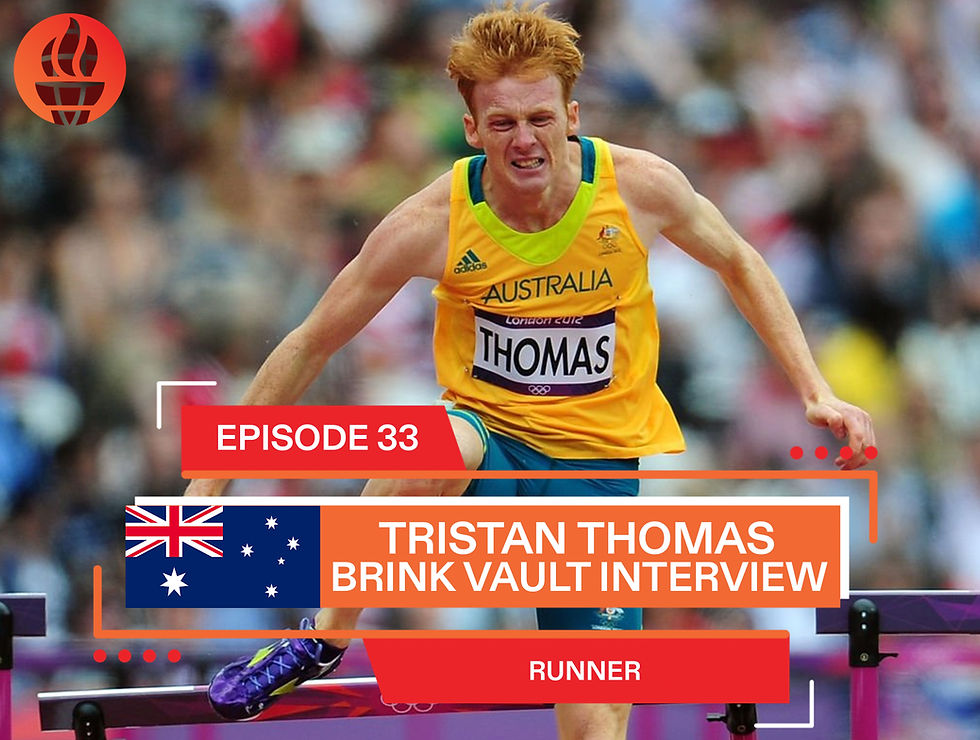
Comments